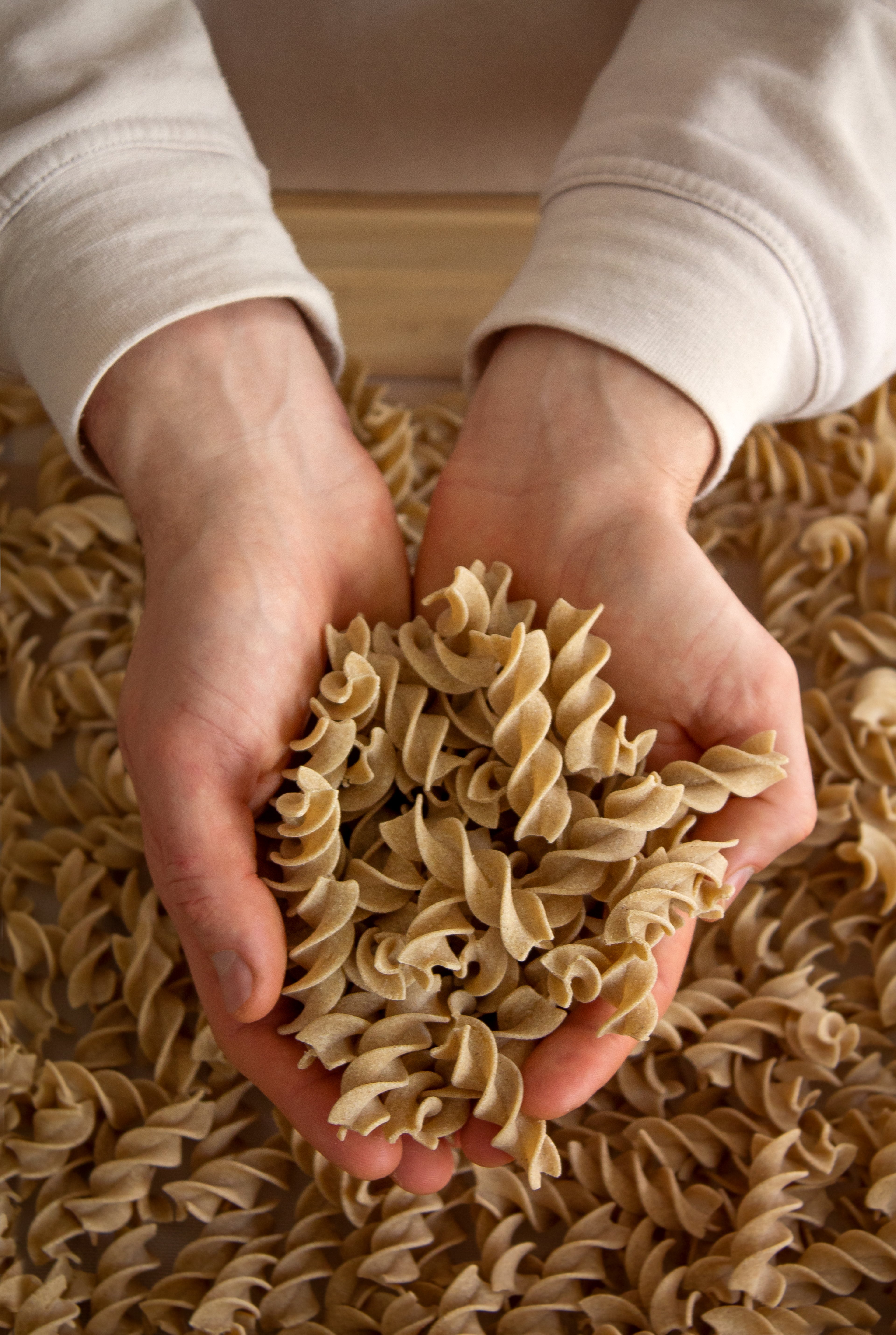
Sorghum, this stranger
As a mixture, the sorghum we draw it on a daily basis, so we've taken care of more than you could imagine. In the next rows we line false myths and real properties of this cereal.
The sorghum is a cereal of the family of graminacees, the herbs to which also belong wheat and rice, species Sorghum bicolor, native to North-East Africa and cultivated today especially in warm and dry areas. It isfifth cereal in the world for quantity produced, after corn, rice, wheat and barley, and isgluten free of nature, because it belongs to a botanical branch away from that of wheat, barley and rye.
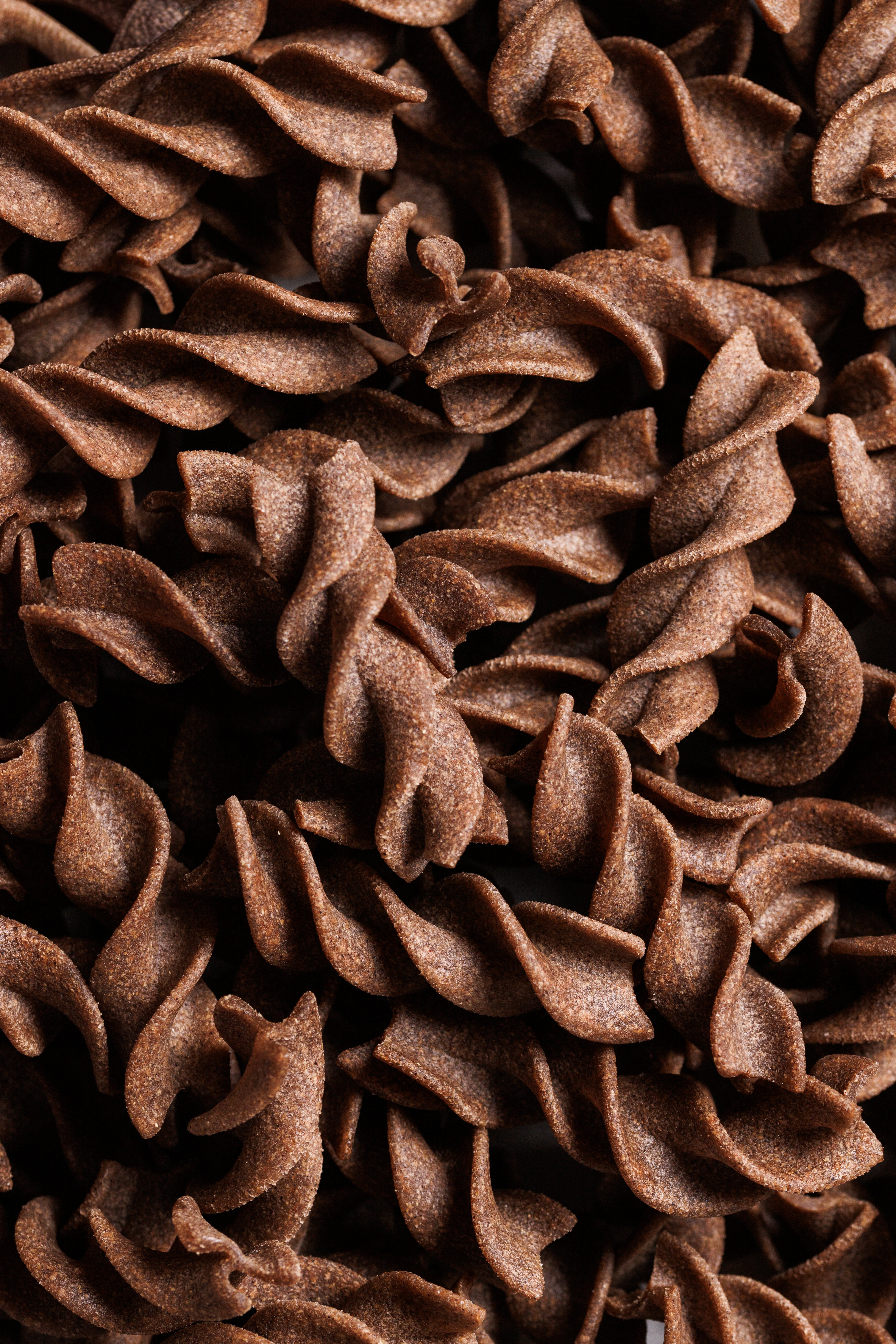
Fifth cereal in the world for production, in Italy occupies 1% of cereal fields. We are in that 1%, with enthusiasm.
What cereal is the sorghum
An African graminacea adapted to the heat and drought, cultivated for millennia.
The CREA sheet, the research centre of the Ministry of Agriculture, describes it as a photosyntetic C4 species - a mechanism that makes photosynthesis more efficient at high temperatures and with little water - cultivated "mainly in arid and semi-arid areas for its tolerance at high temperatures and drought" [CREA [1]](https://soul.crea.gov.it/il-sorgo/).
Production numbers come from FAO, the United Nations Food and Agriculture Organization.
| Cereal | World production 2024 |
|---|---|
| Mais | 1.218 million tonnes |
| Rice | 820 million tonnes |
| Fruit | 798 million tonnes |
| Bar | 142 million tonnes |
| Surgery | 64 million tonnes |
Source: FAO, agricultural production statistics 2010-2024 [FAO 2025 [2]](https://openknowledge.fao.org/items/f9b4475e-6e01-4f64-879c-f2606fed2d4b). In the previous edition, on data 2023, the three largest producers are United States, Nigeria and Mexico, with 14, 11 and 8% of the world's total [FAO 2024 [3](https://openknowledge.fao.org/server/api/core/bitstreams/df90e6cf-4178-4361-97d4-5154a9213877/content).
In Italy thearise from granella- that is, the one left to mature and harvest for dry grain, unlike the forage sorghum, which still cuts green and ends in the ration of animals - occupies about 1% of the cereal surface, that is just over forty thousand hectares, concentrated in Emilia-Romagna [CREA [1]] (https://soulcrea.gov.it/il-sorgo/). In 2023 the national production was 2.4 million quintals on 41,000 hectares (ISTAT 2024 [4]) (https://www.istat.it/storage/ASI/2024/Chapters/C13.pdf).To understand: in the Italian fields the sorghum is a niche culture, while in the world it feeds hundreds of millions of people.Although we are great fans, we can say that it is a niche in Italy. We have a lot more interest in other cereals. But this is not a good excuse to stop reading!
Nutritional values of sorghum and sorghum flour
It resembles other grains in grain, with some extra mineral and a particularity that concerns the database more than the cereal.
The sorghum does not appear in the CREA food composition tables: we checked the complete list of published items and there are buckwheat, millet, pearled barley and quinoa, while the sorghum is no trace. For the nutritional values of the sorghum, the reference remains the US databaseFoodData Centralof the USDA, and we also indicate the voice code, so you can trace the data.
| For 100 g | Surgery in grains, whole white (FDC 2710842) | Integral Sorghum Flour (FDC 168943) | Pearled Sorghum Flour (FDC 2710840) |
|---|---|---|---|
| Energy | 373 kcal | 359 kcal | 364 kcal |
| Carbohydrate | 73.6 g | 76.6 g | 73,5 g |
| Fiber | 8.3 g | 6.6 g | 3.3 g |
| Protein | 10.1 g | 8.43 g | 10.2 g |
| Fats | 4.22 g | 3,34 g | 3,24 g |
| Iron | 3.9 mg | 3,14 mg | 2,22 mg |
| Magnesium | 136 mg | 123 mg | 107 mg |
| Potassium | 367 mg | 324 mg | 274 mg |
Source: USDA FoodData Central, item 2710842, 168943 and 2710840 [USDA [5]](https://fdc.nal.usda.gov/).
The third column is the interesting one:passing from the whole flour to the pearly one the fiber halves and the iron loses a third, because the perlature removes the outer coating and germ. So the useful question in front of a sorghum flour package is not if the sorghum does well: it is if that flour is integral.
A note of honesty about numbers. In the same database there are more items for the same food, with non-small differences: for the sorghum a more old voice indicates 329 chilocalorie and 6.7 grams of fiber, against 373 and 8.3 of the item of 2024. They are different samples analyzed in different years, so read the figures as an order of magnitude (that's why others don't try so much in talking about the sorghum, maybe...).
Because the sorghum is gluten free of nature
Because he's not related to wheat. The proteins that trigger the celiac are in a botanical group to which the sorghum does not belong.
Prolammins - the family of cereal reserve proteins - toxic for those who are celiac are those of wheat, barley and rye, three genera that belong to the tribe of Triticeae. The sorghum lies in another subfamily and in another tribe, and its prolammins are calledcafirine. They are not glyadines, that is, the promises of wheat, and do not behave as such.
This has been verified in two ways. A group of the CNR of Naples analyzed the genome of the sorghum and studied the proteins with immunochemical techniques, which use antibodies to recognize them, without finding toxic peptides, i.e. protein fragments, similar to the glyadine [Pontieri 2013 [6]]](https://pubmed.ncbi.nlm.nih.gov/23432128/). First, a Neapolitan group had tested products based on sorghum on gut fragments of celiac patients and then on real patients, fed for five days: no alteration in tissues, no symptom, unvaried antibodies [Ciacci 2007 [7]]](https://pubmed.ncbi.nlm.nih.gov/17719701/). Five days are few and the number of patients is not declared in abstraction, so the value of that work lies in the direction of the result more than in its amplitude.
The Italian Celiac Association puts the line between the cereals allowed, together with rice, maize, millet, teff and pseudocereals such as quinoa and buckwheat, with an advertence that applies to any flour: the processing can introduce gluten that in the chicco there was not, then the indication on the label [AIC [8](https://www.celiachia.it/die
A necessary clarification for celiac
Sorghum bean is gluten free. The dishes we serve, however, are not suitable for those who are celiac.
The reason is the cuisine, not the raw material: the sorgo paste is cooked in the same boilers of the wheat paste, and in that water the gluten passes. It is the variable that the literature on contamination indicates as critical, in fact the technical recommendation for catering is to cook in separate pot [Korth 2021 [9]]](https://pubmed.ncbi.nlm.nih.gov/34324674/).
If you're diagnosed with celiac disease, we're really sorry, but sour pasta we serve is not for you.We prefer to tell you with extreme transparency since this article: gluten contamination can take place not only through cooking water, but also through work surfaces, laboratory air and kitchen utensils. To guarantee you a total absence of contamination would require two fully separated kitchens and two laboratories, which unfortunately is not feasible for us.
Sorgo properties, for what data says
On the profile of fiber and minerals speaks the table above. On the rest there is an experimental literature: let's see what it says.
The most interesting experimental study is Australian, and is published in the European Journal of Clinical Nutrition. Twenty healthy people ate, in random order and on three different occasions, a paste of only durum wheat, one with 30% red sorghum and one with 30% white sorghum, all with the same percentage of carbohydrates available; the researchers followed the glycemia for two hours and the appetite for three, and weighed how the participants ate at a free lunch [Khan 2025 [10]](https://pubmed.nc.nc From the study emerges how adding red sorghum flour in the pasta creates a product that reduces glycemia, favorably modifies the parameters of appetite and reduces the subsequent energy intake, MA, but, at the moment the official guidelines do not confirm these benefits, as they emerged from this study. So we can't advise you on that. But the studio is there, what do you do? This time you'll have to decide without our help. However, if you are interested in reading the measured results, the study is linked and abstract is public.
As here we tend to be precise and SCIEN-TI-FI-CI, 2 things still on this research (the results of which are often taken as absolute truth, but NOT FROM US): the sample is twenty healthy people in a sharp design, that is a single meal, and no one has been followed over time. And the proven pasta contained 30% of sorghum on the basis of durum wheat, so it is valid for mixed formulations and on a single sorghum paste does not say anything; the results relate to the red sorghum, which is the rich variety of phenolic compounds, plant substances of the same family of tannins.
There are then studies on the glycemic index of the sorghum, such as the trial conducted on benches found here: [Dos Reis Gallo 2021 [11]](https://pubmed.ncbi.nlm.nih.gov/34681305/), and studies on phenolic and phytonutrient compounds of the sorghum, which if you have pollinated you can read here: [denc Oliveira 2024 [12] We didn't seem to talk about it extensively, but if you want, you can write us at allalbaSorg(er)[email protected] (pssst, we just invented it, don't write!).
Sorghum starch digests slowly
The heat of cooking binds proteins to starch and slows the access of enzymes.
The review of Olson and colleagues on Foods of 2026 describes the mechanism: by cooking, cafirines form bonds between them and starch, and this braid hinders digestive enzymes, so that the cooked sorghum is less quickly digestible than other cereals [Olson 2026 [13]](https://pubmed.ncbi.nlm.nih.gov/42195884/).
It is a characteristic of the matrix, so it depends on cooking and processing more than variety. We wrote it inglycemic index and glycemic loadand inGlycemic index of pasta.
Contraindications: the history of venomous sorghum, tannins and dense
The bean that arrives in the dish has no contraindications. But if you've heard the story of the poisonous sorghum, we'll explain it right away, along with a couple of other things:
The poisonous sorghum lies in the field."Venus Surge" is a real research on Google and starts from a real fact: the plant produces durrine, a substance that frees cyanide acid when the tissue is injured. It is concentrated in the young plants, in the embroidery, that is the shoots that grow after the vent, and in those that have suffered drought, and for this is a problem that they know the breeders when they send the animals to grazing. In the seeds there are traces between 1 and 29 milligrams per kilo [OGTR 2024 [14]] (https://www.ogtr.gov.au/sites/default/files/2024-11/the biology of sorghum.pdf). The grain you buy at the supermarket (or what we knead) is not poisonous. If then we want to go in full complottism mode tell me that I prepare myself (esco).
Since we're talking about the tiny sorghum, it's worth talking abouttannins and phytic acid, which brake iron: they are natural substances of the bean that bind it and reduce its absorbed share. The tannins abound especially in dark grain varieties, selected because the birds find them unpleasant. Phytic acid is found in all whole grains, and the FAO indicates it as the main brake, more than tannins, also indicating that the grinding of the grain improves the availability of iron and zinc [FAO 1995 [15]] (https://www.fao.org/4/T0818E/T0818E0j.htm).
That the two things are interwoven the study in which the absorbed iron was really measured, with marked iron, i.e. recognizable and traceable in the body: removing the phytic acid from the cereal pappe the absorption doubled in the sorgo poor of tannins, while in that rich dinini tan did not change anything [Hurrell 2003 [16]] (https://pubmed.ncbi.nlm.nih. Where the tannins are many, I mean, they command.
It comes out the usual compromise: perlare the bean improves the absorption of minerals and takes away fiber. For those who eat the whole thing little.
Sorghum and nickel
Who is sensitive to nickel seeks lists of allowed and prohibited cereals. A value published on the sorgo nickel, however, we did not find it.
Nickel in foods has recently been subject to the highest standards of law. Regulation (EU) 2024/1987 (the year of exit is 2024, 1987 is only number. I see you there ready to point out the error, TI VEDO) fixes 0,80 milligrams per kilo for cereals in general from 1 July 2026 [Reg. EU 2024/1987 [17](https://eur-lex.europa.eu/legal-content/IT/TXT/PDF/?uri=OJ:L 202401987). The sorghum falls into this generic item.
In Italy an adult takes on average 1,55 micrograms of nickel per kilo of weight per day, under the tolerable dose of 13, and about 30% comes from bread, pasta and bakery products [Cubadda 2020 [18]] (https://doi.org/10.1016/j.fct.2020.111813). There's no one on the one.
Sorghum and FODMAP
FODMAPs are fermentable sugars that in those with irritable intestines can annoy. Monash University, the centre that has built the low FODMAP protocol, lists the sorre flour among the low content [Monash [19]](https://www.monashfodmap.com/blog/grains-low-fodmap-diet/nutrition20), while a 2025 study of three varieties cultivated in Ugandaclesier found 1,05 grams per 100 grams of raw bean, over the threshold of 0.5jour The two sizes are made differently, per portion of flour and for 100 grams of grain, and the data remains few: if you follow the protocol, ask your dietist before an article.
Sorghum and histamine
On this one there is, and tranquility. A study published on Food Chemistry analyzed twenty-two lines of sorghum looking for ten biogenic amines, the family of compounds to which the histamine belongs, andhistamine was not found in any sample[Paiva 2015 [21]](https://www.sciencedirect.com/science/article/abs/pii/S030881461401601X).
How to cook the sorghum, in beans and in flour
The decorated grains, that is, deprived of the skin, are boiled like rice.
The FAO, in the document on the rise in human nutrition, lists traditional uses more various than images: boiled beans such as rice, cous cous cooked steam, dense, liquid and fermented polente, sorghum blown [FAO 1995 [22]] (https://www.fao.org/4/T0818E/T0818E0g.htm).
In the kitchen the beans, which in the research also appear as sorghum seeds, behave like a cereal in salad or soup. On the times and on the relationship with the water there is no technical source that we can quote: they change with the degree of decoration of the lot, therefore it makes faith the package, also for the ammollo.
The flour is another matter, and the reason is the same for which the sorghum paste is difficult to do well (and we, modestly...). In the wheat the glyadines give extensibility and the gluten, the other half of the gluten, elasticity, and together form a network that retains the gases of the leavening: without that network the dough loses cohesion, the volume cala and the mollic becomes dense and friable [Alibekova 2025 [23]] (https://www.ebi.ac.uk/europepmc/webservices/90 Sorghum kafirine form nothing like that. For this reason the sorgo flour works well in preparations that do not ask for structure, such as polente, crespelle, biscuits and cakes, while for bread it is necessary to accompany it with other flours or with thickeners.
From miscusi the sorghum is a dish, not a curiosity
You came here to know that cereal is the sorghum, and the most useful answer is that it is an ancient, robust cereal, with good fiber and minerals, on which research in man is still thin.
We use it forSuperpastein the sorgo version, along with the organic semolinas of durum wheat Kronos and ancient stone ground grains such as Perciasacchi. We chose it because it grows where the grain does not exist and this seems to us a sensible answer to the climate that changes, not because it heals something. Our raw materials are toldhereand the history ofancient grainsIt's a bit apart.
For all others: choose a dish frommenuor do your ownmake your own, deciding size, dressing and protein source one by one. Who runs, who is on a diet, who eats vegetable: from miscusi eats almost anyone.Book your placeand ask for the outline version.
Fast answers (FAQ)
What is the sorghum?
It is a cereal of the family of graminaceas, species Sorghum bicolor, native to north-eastern Africa and suitable for heat and drought. It is the fifth cereal in the world for quantity produced, with 64 million tons in 2024.
Does the sorghum contain gluten?
No, the sorghum bean is devoid of natural gluten, because it belongs to a botanical branch away from wheat, barley and rye and its reserve proteins are cafirine. The Italian Celiac Association lists it among the allowed cereals, warning that for flours and semolina the indication must always be verified on the label.
Is a sorghum paste good for who's celiac?
Depends on how it's cooked. The bean is gluten free, but to cook a gluten-free pasta in the same water of the wheat paste brings gluten beyond the legal limit, and the technical recommendation for catering is the separate pan. Miscusi sorghum paste is cooked in the same boilers of wheat paste, so it is not suitable for celiac.
What are the properties of the sorghum?
For 100 grams of whole grains the USDA data bank indicates 8.3 g fiber, 10.1 g protein, 3.9 mg iron, 136 mg magnesium and 367 mg potassium. The varieties with the skin of the colored bean are rich in phenolic compounds, but the effects described for these compounds come largely from studies on cells and animals.
How do you cook the sorghum?
The decorated grains are boiled in water and serve as rice, salad or soup; traditionally they are also used for cous cous, dense and liquid polente and for blown sorghum. On the times it is best to follow the package, since they change with the degree of decoration of the lot.
What recipes do you make with the sorghum?
With the beans you make salads of cereals, soups and dishes instead of rice; with the flour polente, crespelle and pastries. And then there's the sorghum paste, which is ours.
What do you do with the sorghum flour?
It works in polente, crespelle, biscuits and pastries. For the bread it serves a help, because the proteins of the sorghum do not form the elastic net that in the wheat retains the gases of the leavening: alone the sorghum flour gives a little cohesive dough and a dense mollic.
Sources
| 2. FAO, Agricultural production statistics 2010-2024, FAOSTAT Analytical Brief n. 121, 2025. https://openknowledge.fao.org/items/f9b4475e-6e01-4f64-879c-f2606fed2d4b |
| 3. FAO, Agricultural production statistics 2010-2023, FAOSTAT Analytical Brief n. 96, 2024. |
| 4. ISTAT, Italian Statistical Yearbook 2024, Chapter 13 Agriculture, Table 13.2. https://www.istat.it/storage/ASI/2024/Chapters/C13.pdf |
| 5. USDA, FoodData Central, FDC entries 2710842, 168943, 2710840. https://fdc.nal.usda.gov/ |
| 6. Pontieri P, Mamone G, De Caro S et al., Sorghum, a healthy and gluten-free food for celiac patients as demonstrated by genome, biochemical, and immunochemical analyses, Journal of Agricultural and Food Chemistry, 2013. |
| 7. Ciacci C, Maiuri L, Caporaso N et al., Celiac disease: in vitro and in vivo safety and palatability of wheat-free sorghum food products, Clinical Nutrition, 2007. |
| 8. Italian Celiac Association, The cereals allowed. https://www.celiachia.it/dieta-without-glutine/gestire-dieta-without-glutine/i-cereal-perm/ |
| 9. Korth N, Taylor SL, Clarke JL, Downs ML, Gluten cross-contact in restaurant-scale pasta cooking, Journal of Food Protection, 2021. |
| 10. Khan I, Johnson SK, Yousif AM et al., Effect of sorghum flour-containing paste on postprandial glycemia, appetite and energy intake healthy individuals, European Journal of Clinical Nutrition, 2025. |
| 11. Dos Reis Gallo LR, Reis CEG, Mendonça MA et al., Impact of gluten-free sorghum bread genotypes on glycemic and antioxidant responses in healthy adults, Foods, 2021. |
| 12. de Oliveira LL, de Alencar Figueiredo LF, Sorghum phytonutrients and their health benefits: a systematic review from cell to clinical trials, Journal of Food Science, 2024. |
| 13. Olson D, Muniandy A, Zhu L et al., Sorghum starch and protein digestibility: mechanisms, modifications, and health implications, Foods, 2026. |
| 14. Office of the Gene Technology Regulator, The biology of Sorghum bicolor (L.) Moench subsp. bicolor, Australian Government, 2024. https://www.ogtr.gov.au/sites/default/files/2024-11/the biology of sorghum.pdf |
| 15. FAO, Sorghum and millets in human nutrition, Food and Nutrition Series n. 27, chapter 6, 1995. https://www.fao.org/4/T0818E/T0818E0j.htm |
| 16. Hurrell RF, Reddy MB, Juillerat MA, Cook JD, Degradation of phytic acid in cereal porridges improves iron absorption by human subjects, The American Journal of Clinical Nutrition, 2003. |
| 17. European Commission, Regulation (EU) 2024/1987 amending Regulation (EU) 2023/915 as regards the maximum nickel content in certain foodstuffs, 30 July 2024. https://eur-lex.europa.eu/legal-content/IT/TXT/PDF/?uri=OJ:L 202401987 |
| 18. Cubadda F, Iacoponi F, Ferraris F et al., Dietary exposure of the Italian population to nickel: the national Total Diet Study, Food and Chemical Toxicology, 2020. https://doi.org/10.1016/j.fct.2020.111813 |
| 19. Monash University, Low FODMAPgrain, blog of the FODMAP program. https://www.monashfodmap.com/blog/grains-low-fodmap-diet/ |
| 20. Alowo D, Olum S, Mukisa IM, Ongeng D, Effect of thermal and non-thermal processing on fermentable oligo-di-monosaccharides and polyols (FODMAPs) content in millet, sorgfulhum, soybean and sesame varieties, Frontiers in Nutrition, 2025. |
| 21. Paiva CL, Evangelista WP, Queiroz VAV, Glória MBA, Bioactive amines in sorghum: method optimisation and influence of line, tannin and hydric stress, Food Chemistry, 2015. |
| 22. FAO, Sorghum and millets in human nutrition, Food and Nutrition Series n. 27, chapter 5, 1995. https://www.fao.org/4/T0818E/T0818E0g.htm |
| 23. Alibekova Z, Bayisbayeva M, Shamsudin R et al., Problems and approaches in the improvement of gluten-free bread texture: a comprehensive review, International Journal of Food Science, 2025. http://www.ebi.ac.uk/europepmc/webservices/rest/PMC13159086/fullTextXML |