Debunking Diet Carbohydrate Myths
7 min read
Afraid of carbs? Get comfortable — we're about to dismantle every restriction nightmare. On a diet you can (and should) eat pasta, and the reference portion is 80 grams dry, as Italian guidelines indicate. That's about 270 calories: less than you think, and good energy — not a sin to atone for. Understanding how much pasta to eat on a diet isn't utopia, and the scale has nothing to fear. Studies say the opposite. Here's why it works and how to bring it to the table without ruining it with the wrong sauce.
Let's start with a clear stance, because at miscusi this matters: pasta was demonized for years on myths, not data. Time to put it back where it belongs — in the middle of the table.
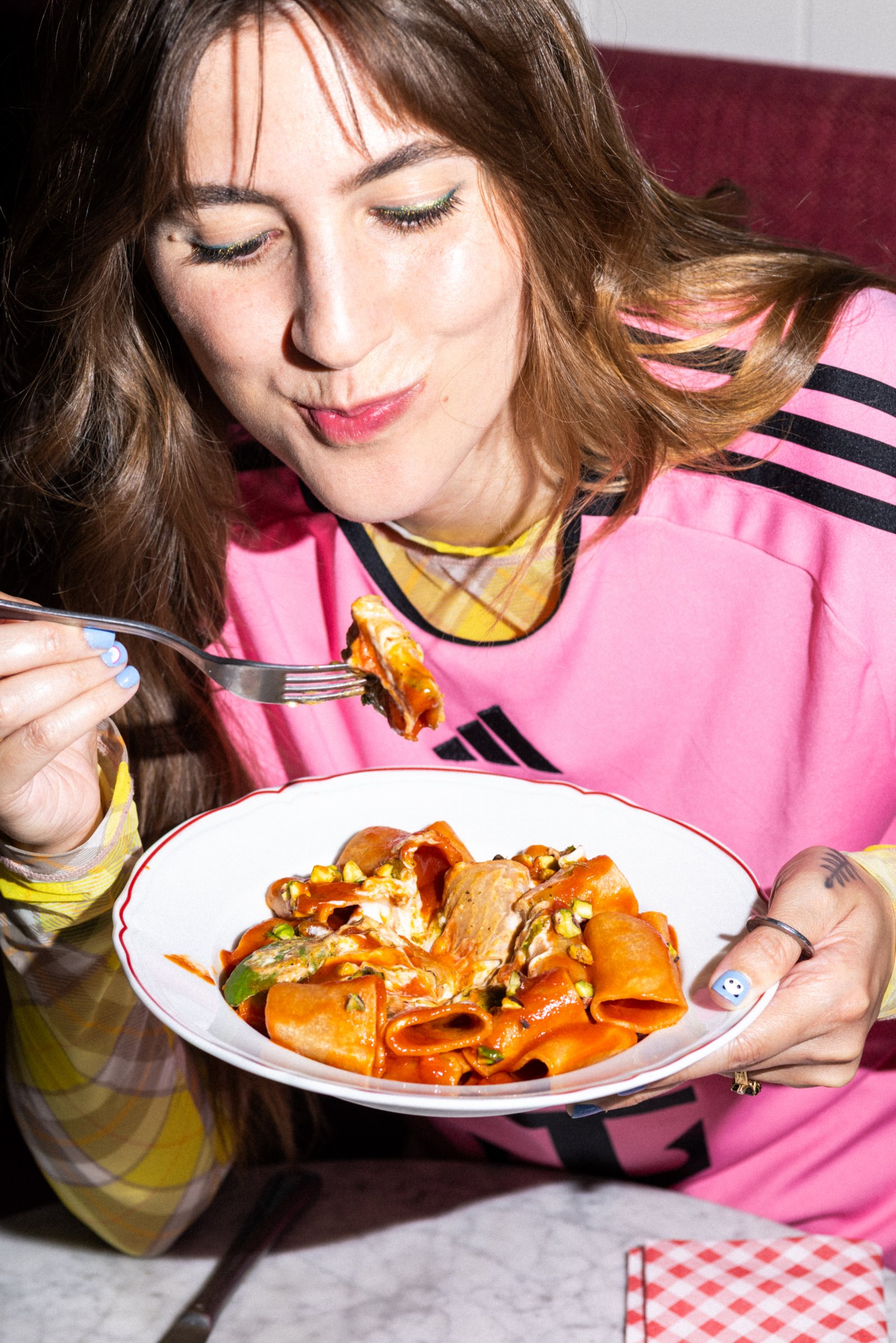
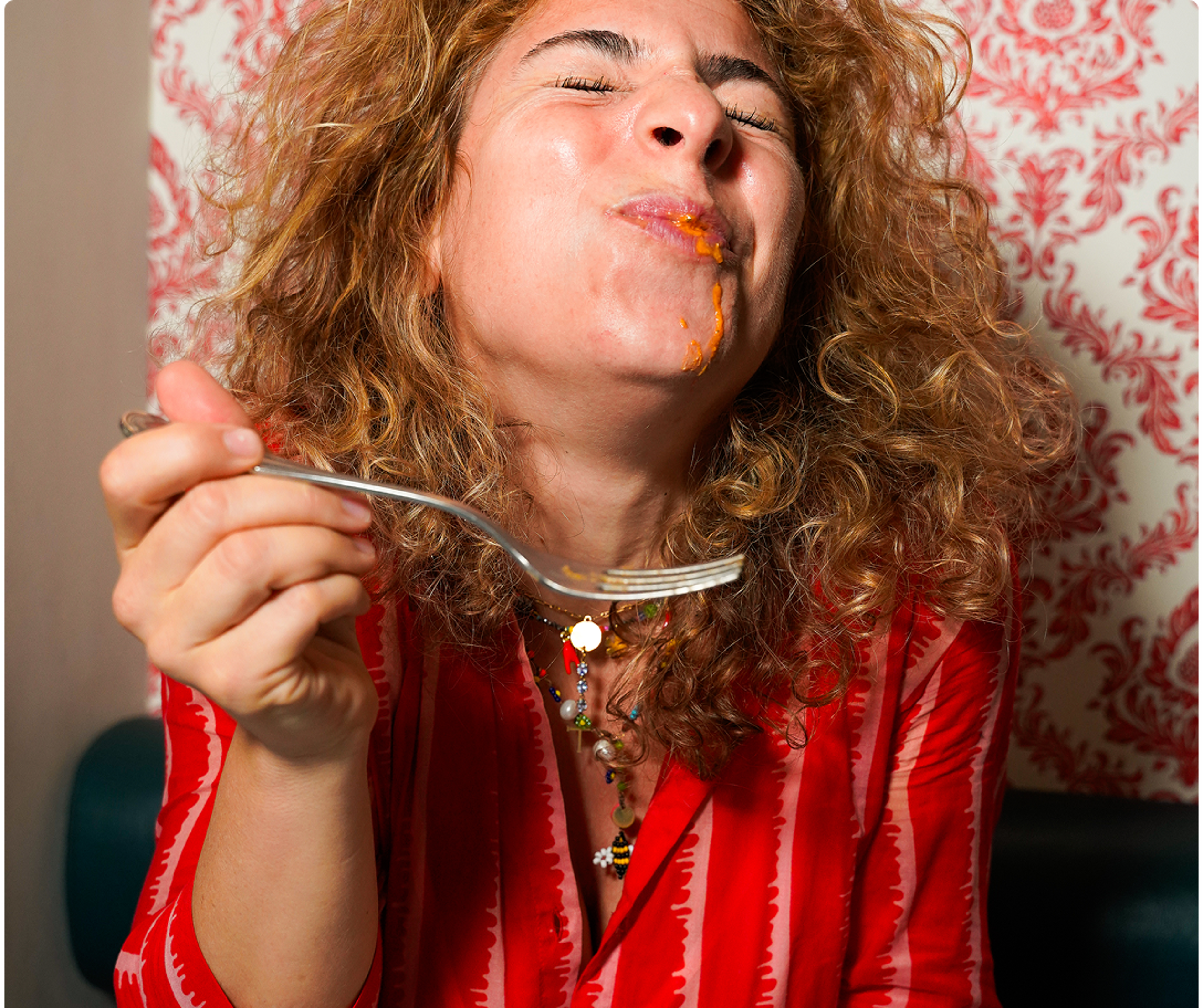
Good carbs are energy. Not a cheat. FUCK "CHEAT" MEALS.
The Weight of Happiness: The Right Portions
The standard portion of diet pasta is 80 grams of raw pasta for a main course, according to the LARN and CREA (half if it is in soup, 100 g if it's fresh egg pasta, 125 g if stuffed). It's not a number chosen at random: it's the reference portion size for the Italian population.\n\nHere's what those 80 grams really amount to, starting from the values for 100 g of raw durum pasta (CREA - Tables of food composition):
\n\n\n
\n\nOnce cooked and drained, pasta swells with water and drops to about 158 kcal per 100 grams (USDA FoodData Central). So no: a diet pasta dish, properly portioned, is not a calorie bomb. It is a complete, filling meal and low in fat. The problem, if any, comes when the portion triples or when it is drowned in heavy condiments. But that applies to any food.\n\nAnd if you compare with our fresh pasta, the numbers improve even more: depending on the shape, a plate has from 3 to over 8 grams of fiber and up to 16-17 grams of protein per serving, with sugars and salt almost zero. More fiber and more protein than average mean one thing for those on a diet: more satiety, for the same plate.
\n\n
| Value (durum wheat pasta) | Per 100 g raw | Portion of 80 g |
|---|---|---|
| Energy | 341 kcal | ≈ 273 kcal |
| Carbohydrates | 72.7 g | ≈ 58 g |
| Proteins | 13.5 g | ≈ 11 g |
| Fats | 1.2 g | ≈ 1 g |
| Fiber | 1.7 g | ≈ 1.4 g |
\n\nOnce cooked and drained, pasta swells with water and drops to about 158 kcal per 100 grams (USDA FoodData Central). So no: a diet pasta dish, properly portioned, is not a calorie bomb. It is a complete, filling meal and low in fat. The problem, if any, comes when the portion triples or when it is drowned in heavy condiments. But that applies to any food.\n\nAnd if you compare with our fresh pasta, the numbers improve even more: depending on the shape, a plate has from 3 to over 8 grams of fiber and up to 16-17 grams of protein per serving, with sugars and salt almost zero. More fiber and more protein than average mean one thing for those on a diet: more satiety, for the same plate.
Does pasta make you fat? Spoiler: science says no
No, pasta itself does not make you gain weight: including carbs in a weight-loss diet with pasta is backed by large-scale studies showing that, within a balanced diet, people who eat pasta do not weigh more — often the opposite. Not carbonara-fan opinion: published data.
The point is simple: know how much pasta to eat on a diet and pair it well. The rest is carbophobia — irrational fear of carbs — which we fight one plate (and smile) at a time.
| 1. Moli-sani and INHES study (Pounis G. et al., Nutrition & Diabetes, 2016): in over 23,000 people, higher pasta intake was linked to better Mediterranean diet adherence and a lower body mass index. |
| 2. BMJ Open meta-analysis (Chiavaroli L. et al., 2018): across 32 controlled studies, pasta in low-GI diets led to a slight body-weight reduction (average -0.63 kg). Not a gain: a reduction. |
Eat carbs, feel good: why pasta works (even on a diet)
Pasta fits a wellness path for three concrete reasons: it fills you up, has a medium-low glycaemic index, and gives slow-release energy.
| 1. Medium-low glycaemic index. The compact structure slows starch digestion: average GI around 46–55, lower if wholegrain, with legumes or cooked al dente (Foods 2021). |
| 2. Satiety. The right fibre and protein fill and satisfy. You don't need another miracle "pasta diet" — you need a habit you can keep. |
| 3. Clean energy. Complex carbs are the body's preferred fuel. Cutting them drastically leads to fatigue and rebound. |
How to eat pasta on a diet without guilt
The secret isn't cutting pasta — it's building the plate the right way.
| 1. Cook it al dente. Better taste and a lower glycaemic index. |
| 2. Add vegetables or legumes. More satiety, lower glycaemic response. Dishes like Campagnola go exactly this way. |
| 3. Don't forget protein. A lean protein source slows sugar absorption and completes the meal. |
| 4. Watch the sauce, not the pasta. Extra calories usually come from heavy sauces, not from the starting 80 grams. |
Pasta for dinner: can you? (Spoiler: of course)
Yes, you can eat pasta at dinner, even on a diet. The body has no internal clock that turns carbs into fat at 8 pm: what counts is the daily calorie balance, not the meal time. For anyone training, dinner pasta helps refill energy stores. "Carbs at night make you fat" is one of the hardest myths to kill.
In short: the rules of the game
| Question | Short answer |
|---|---|
| How much pasta on a diet? | 80 g dry (≈ 270 kcal) per meal |
| Does pasta make you fat? | No, at equal calories in a balanced diet |
| Al dente or overcooked? | Al dente: lower GI |
| OK at dinner? | Yes, the daily balance counts |
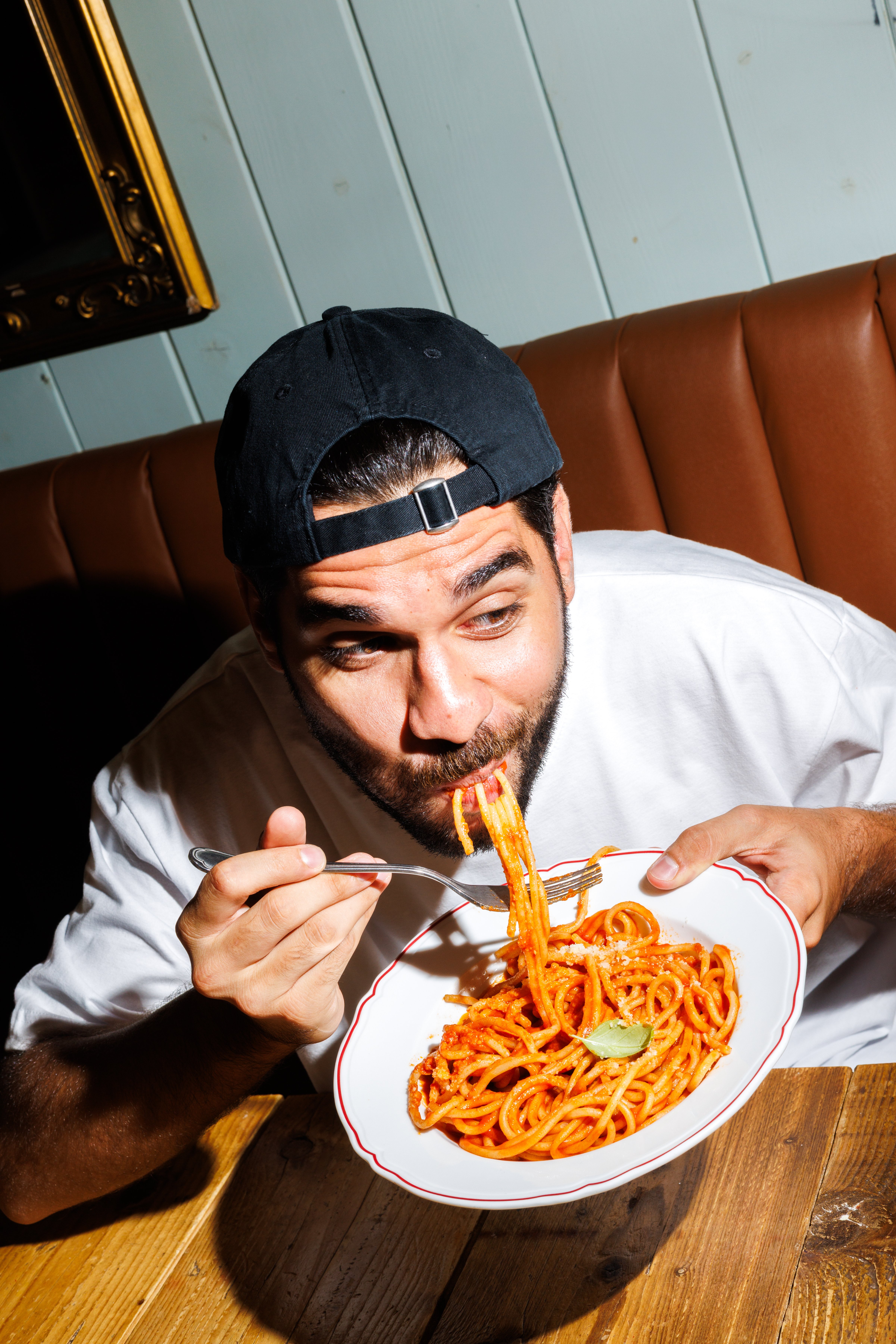
At miscusi, pasta on a diet is (simply) lunch
Now you know: on a diet pasta isn't a cheat meal — it's a reward you can afford. And if it's pasta, let it be done properly. Ours is Superpasta: fresh, eggless, only water and semolina from Kronos durum wheat and stone-milled organic ancient grains like Perciasacchi, bronze-die extruded. More fibre, more taste, zero guilt.
You don't have to cook it: we seat you, pour a glass, and handle the rest. Discover the menu or book your spot at the nearest miscusi.
Quick answers (FAQ)
How much pasta can you eat on a diet?
How much pasta can you eat on a diet?
The standard portion according to Italian guidelines is 80 grams of dry pasta per main meal, about 270 calories. The exact amount should, of course, be adjusted to your daily needs.
Does pasta make you gain weight?
No, not by itself. Large-scale studies confirm that, within a balanced diet, people who eat pasta do not weigh more. What makes the difference are portions, quality and condiments, not the carbohydrate itself.
Can you eat pasta at dinner without gaining weight?
Absolutely. The body doesn't convert carbohydrates into fat based on the time of day: what matters is the total caloric balance for the day.
Is whole-grain or regular pasta better for dieting?
Both are perfectly fine. Whole-grain pasta has more fiber and is slightly more filling, but semolina pasta cooked al dente remains a medium-low glycemic index food. What matters more is how you build the entire plate.
How many times a week can you eat pasta on a diet?
There is no fixed limit: pasta can fit into a healthy daily diet, as long as portions and condiments are managed well. It is a pillar of the Mediterranean diet.
Sources
| 1. CREA, Food composition tables, "Semolina pasta" (dry) — alimentinutrizione.it |
| 2. CREA, "Recommended portions and frequencies" — sapermangiare.an.crea.gov.it |
| 3. USDA FoodData Central, "Pasta, cooked, unenriched" — fdc.nal.usda.gov |
| 4. Pounis G. et al., Nutrition & Diabetes 2016 — PMC4973136 |
| 5. Chiavaroli L. et al., BMJ Open 2018 — PMC5884373 |
| 6. Di Pede G. et al., Foods 2021 — PMC8623826 |