Fat, weight, strength and bones: the numbers behind fasted training
Here carbophobia dressed up as a training method — and for once the numbers are so small you can count them by hand.
Training on an empty stomach does not make you lose more weight and does not improve performance. In a single fasted session the extra fat oxidized is about 3 grams — less than thirty calories. On performance the rule is duration: beyond one hour eating beforehand helps; under one hour the difference doesn't show. On weights, studies find no differences in strength or muscle mass. One figure nobody quotes remains: among endurance athletes who train fasted, bone injuries are more frequent.
In the lines that follow you'll find: the difference between social-media fasting and the carbohydrate periodization real athletes use, why the cortisol-eats-your-muscles story is just a fairy tale, and — precise and contextualized — what the research actually says.
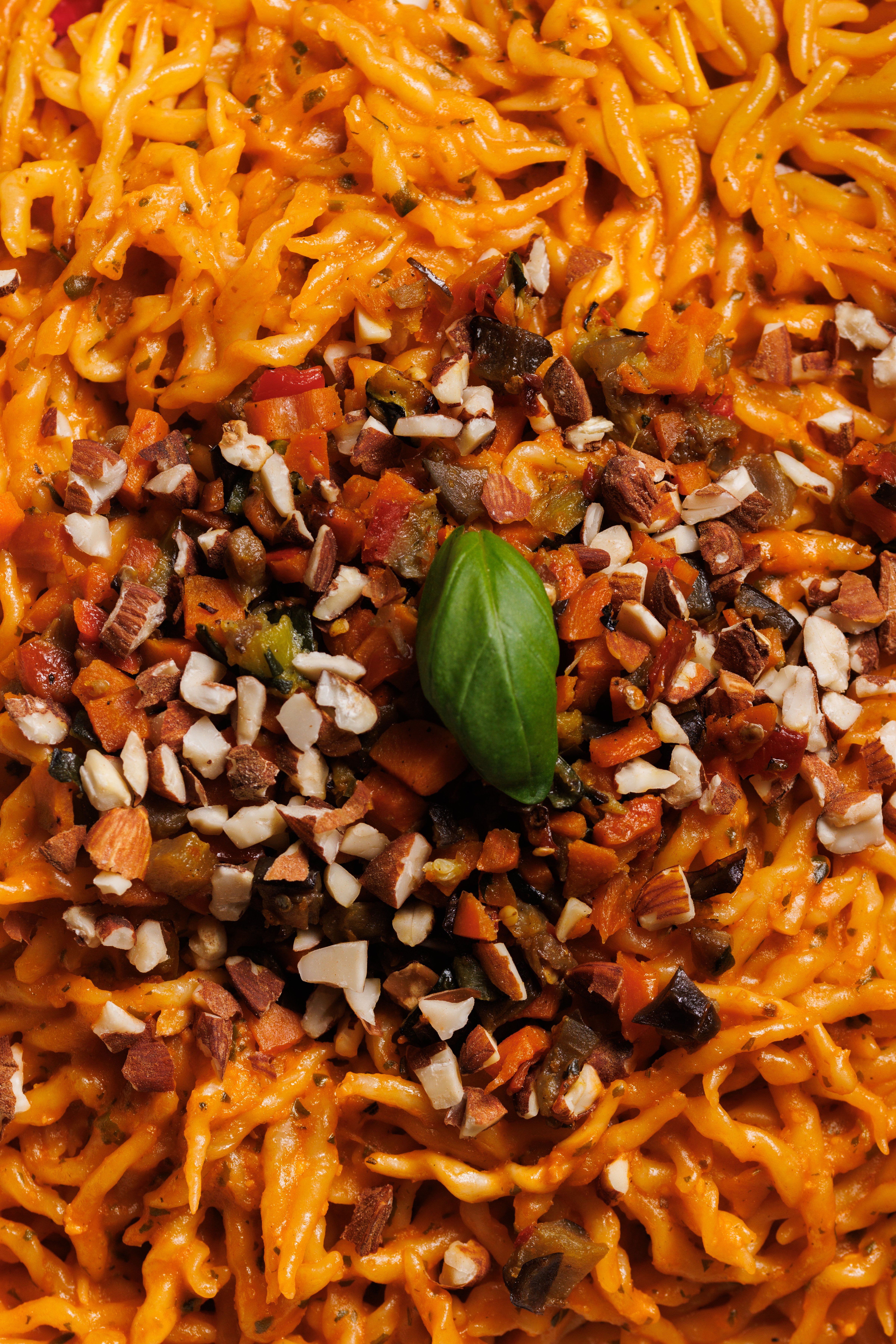
Glycogen isn't a luxury to grant yourself: it's the tank. You can start with the warning light on, but don't call it smart training.
How much extra fat you burn training fasted
About three grams per session — and that's all there is.
The most precise measure available is from Vieira (not the footballer!) and colleagues, published in the British Journal of Nutrition in 2016: a systematic review with meta-analysis. From 27 studies on 273 adult participants they found that fasted aerobic exercise oxidizes 3.08 extra grams of fat per session versus the same exercise after a meal [Vieira 2016 [1]].
Three grams of fat are worth less than thirty calories: what you shift by eating two fewer almonds at snack time. On a 2000-calorie daily budget it's background noise, not a strategy.
The authors themselves report a publication bias; the 3.08 g figure is already the corrected estimate. So it's not a cautious underestimate — it's the number after correction.
Does training fasted make you lose more weight?
No — and two kinds of evidence say the same thing.
Hackett and Hagstrom (2017) pooled five studies on 96 participants: fasted exercise does not increase weight or fat-mass loss versus fed [Hackett 2017 [2]]. Schoenfeld et al. (2014): twenty young women, four weeks of aerobic work, same hypocaloric diet — weight and fat mass fell in all, with no difference between fasted and fed [Schoenfeld 2014 [3]].
Frampton et al. (2022) looked at the whole day: those who train fasted eat less in the next 24 hours, but also expend less energy and feel hungrier [Frampton 2022 [4]]. The ledger closes even — and you've spent the morning thinking about the fridge.
If weight is the goal, the lever is elsewhere: see pasta a dieta and la pasta fa ingrassare.
Fasting and performance: session duration matters
Over an hour, eating beforehand shows. Under, it doesn't.
Aird, Davies and Carson (2018): 46 studies. A pre-workout meal solidly improves prolonged aerobic performance; on shorter sessions the difference doesn't appear [Aird 2018 [5]].
| Session duration and type | Does the pre-meal matter? |
|---|---|
| Under 60 minutes at moderate intensity | No, usually not measurable |
| Over 60 minutes of aerobic work | Yes, performance is better |
| Strength sessions | No difference in adaptations |
| Sprints and short maximal efforts | No difference in adaptations |
In practice: forty minutes of easy running on empty loses you nothing; ninety minutes and breakfast is part of the session. See also what to eat before running.
The fear that sugar in the hour before training causes a blood-glucose crash mid-effort is called an unfounded myth by Mata et al. (2019) [Mata 2019 [6]].
Lifting weights on an empty stomach
No difference on strength or muscle mass — but the evidence base is small.
Vieira et al. (2025): first meta-analysis on fasted resistance training. No differences on lean mass, hypertrophy or strength; a small fat-mass edge for fasting that the authors themselves weaken (only four studies, three high risk of bias) [Vieira 2025 [7]].
Their RCT (2025): twelve weeks, 28 young adults, matched calories. Quad thickness +1.21 cm fasted vs +1.18 cm fed: overlapping numbers, no statistical difference [Vieira RCT 2025 [8]].
Beyond a threshold fuel matters again. Cholewa et al. (2019): severe carb restriction may spare strength adaptations, but arriving full improves maximal strength and repeat effort [Cholewa 2019 [9]]. A four-exercise session you finish either way; a two-hour weights session, no. See gym nutrition.
"Train low": carb periodization is not skipping breakfast
Athletes who train with low stores don't fast at random: they shift carbs across the day, without cutting the total.
Impey et al. (2018) "fuel for the work required": training with low stores triggers a four-step chain:
| 1. The muscle senses low fuel and sends a signal; |
| 2. The signal turns on aerobic-metabolism genes; |
| 3. The genes grow the enzymes that make energy; |
| 4. The enzymes make you go harder. |
The first three hold (signals 73%, genes 75%, enzymes 78% of studies). The last doesn't: on real performance, 37% improve and 63% show no change [{a('https://link.springer.com/article/10.1007/s40279-018-0867-7', 'Impey 2018 [10]', True)}].
Marquet et al. (2016) "sleep low": both groups ate 6 g carbs per kg per day — same amount, different timing [Marquet 2016 [11]].
Why the molecular signal doesn't become performance
Burke et al. (2020): ketogenic group fat oxidation more than doubled, but on 10,000 m they were 2.3% slower while high-carb improved 4.8% [Burke 2020 [12]].
How many athletes train fasted — and why
Far more than the literature justifies.
Rothschild et al. (2020): among 1950 endurance athletes, 62.9% train fasted at least sometimes. Motives: fat as fuel (42.9%), gut comfort (35.5%), time/convenience (31.4%) [Rothschild 2020 [13]].
Watch the second and third motives — they're the only defensible ones: physiology has no better answer for a rebellious stomach and a 6 a.m. alarm. If you train fasted because nothing goes down at 6:30, you're solving a real problem. If you do it to burn more fat, you're trading energy for three grams.
The risk nobody talks about: bones
The newest figure — and the least quoted — and the one that should make habitual fasters think.
Raleigh et al. (2024): among elite endurance athletes, current fasted training was linked to 1.61× more bone injuries; carb reduction alone showed no association [Raleigh 2024 [14]]. A 30-minute park jog can still be fine fasted if it's convenient.
The authors stress: no cause-effect from this design. Context is low energy availability — IOC REDs consensus 2023 [IOC REDs 2023 [15]].
Cortisol that eats your muscles: the source that doesn't exist
This is where we take something apart — carefully.
Areta, Taylor and Koehler (2021): cortisol rises with chronic low energy availability from exercise (around 30 kcal/kg FFM/day), while food restriction alone is not enough to raise it [Areta 2021 [16]].
An Italian CREA guideline passage on adrenaline, cortisol and "auto-cannibalism" concerns total prolonged fasting for days, not a morning session after overnight fasting [CREA 2018 [17]].
Cortisol from fasted training isn't a datum — it's a rhetorical figure. The documented risk is chronic energy deficit, not breakfast timing.
When training fasted is not a good idea
If you live with diabetes, altered blood glucose, an eating disorder, or you're on a weight-loss path with a professional, fasted training is something to agree with your doctor — not try from hearsay.
ISS defines hypoglycemia as glucose under 70 mg/dL after eight hours of fasting; causes include fasting and unusually intense activity [ISS hypoglycemia [18]].
If the opposite is your problem — training with dinner still in the stomach — see training after dinner.
Why a plate of pasta is the easiest pre-workout meal to dose
Reread the requirements: many carbs, little fat, little insoluble fibre, digestible, easy to quantify, three hours ahead. That's the ID card of a plate of pasta.
The practical edge a bar doesn't have: pasta is weighed. A miscusi spaghetti plate has 86 g of carbs [miscusi data [19]]: for 70 kg that's 1.2 g/kg — inside the 1–4 g/kg range for a medium session.
Ours is Superpasta: fresh, egg-free, water and organic durum semolina (Kronos and stone-milled ancient grains like Perciasacchi), bronze-drawn. Semolina with legumes has over 17 g protein per portion [miscusi data [19]]. Fibre three hours before is fine; half an hour before, last thing you want.
At miscusi energy is not optional
How we see it: when you train seriously, fuel isn't the variable to cut — it's the one to count on.
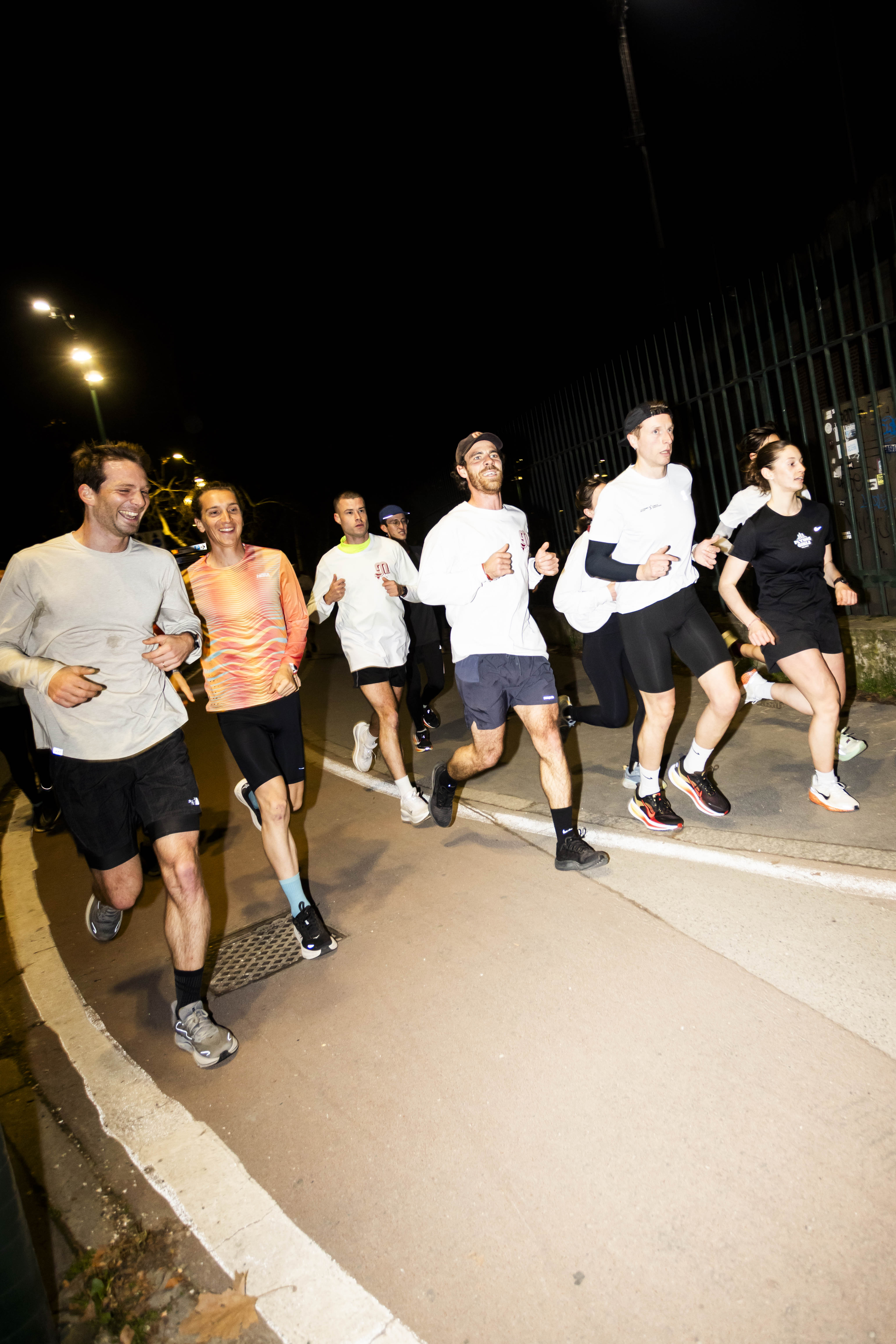
Our Power of Carbs ambassadors never stopped eating carbs to go harder — and that's no accident. Book your spot at the nearest miscusi: we handle the tank, you handle the repeats. Watch the hours though — if you train under cover of darkness we might be closed!
Quick answers (FAQ)
Does training fasted burn more fat?
Yes, but very little: about 3 extra grams per session according to Vieira et al. 2016 — less than thirty calories. During fasted training the share of fat used as fuel is higher, while monthly fat loss depends on whole-day energy balance.
Does training on an empty stomach make you lose weight?
No more than training after eating. With the same diet and training, weight and fat-mass results overlap, and those who train fasted tend to be hungrier afterwards.
Is it better to train fasted or after eating?
It depends on duration. Beyond sixty minutes of aerobic work, eating beforehand improves performance; under that threshold the difference isn't measured. On weights and sprints, adaptations are the same.
Does training fasted make you lose muscle?
Randomized resistance-training studies don't show it: after twelve weeks muscle thickness and strength grow the same with or without a pre-meal. Lean-mass loss tracks chronic energy deficit, not breakfast timing.
Does fasting raise cortisol?
Cortisol rises with chronic low energy availability from exercise; skipping breakfast before a session alone is not shown to raise it meaningfully. One of the most repeated and least documented claims on the topic.
Who should not train fasted?
Anyone with diabetes or altered blood glucose, a history of eating disorders, or high training volume with trouble covering energy needs. Discuss with your doctor.
What does "train low" mean?
Training with low carb availability in selected sessions without cutting the daily total — e.g. carb-free dinner and morning session before refuelling. Studied protocols keep about 6 g per kg body weight per day.
Sources
| 1. Vieira AF, Costa RR, Macedo RC, Coconcelli L, Kruel LF, Effects of aerobic exercise performed in fasted v. fed state on fat and carbohydrate metabolism in adults: a systematic review and meta-analysis, British Journal of Nutrition, 2016. https://doi.org/10.1017/S0007114516003160 |
| 2. Hackett D, Hagstrom AD, Effect of Overnight Fasted Exercise on Weight Loss and Body Composition, Journal of Functional Morphology and Kinesiology, 2017. https://www.mdpi.com/2411-5142/2/4/43 |
| 3. Schoenfeld BJ, Aragon AA, Wilborn CD, Krieger JW, Sonmez GT, Body composition changes associated with fasted versus non-fasted aerobic exercise, Journal of the International Society of Sports Nutrition, 2014. https://doi.org/10.1186/s12970-014-0054-7 |
| 4. Frampton J, Edinburgh RM, Ogden HB, Gonzalez JT, Chambers ES, The acute effect of fasted exercise on energy intake, energy expenditure, subjective hunger and gastrointestinal hormone release, International Journal of Obesity, 2022. https://doi.org/10.1038/s41366-021-00993-1 |
| 5. Aird TP, Davies RW, Carson BP, Effects of fasted vs fed-state exercise on performance and post-exercise metabolism, Scandinavian Journal of Medicine and Science in Sports, 2018. https://doi.org/10.1111/sms.13054 |
| 6. Mata F, Valenzuela PL, Gimenez J et al., Carbohydrate Availability and Physical Performance, Nutrients, 2019. https://doi.org/10.3390/nu11051084 |
| 7. Vieira AF, Blanco-Rambo E, Macedo RCO, Cadore EL, Resistance training performed in the fasted state compared to the fed state on body composition and strength in adults, Journal of Bodywork and Movement Therapies, 2025. https://doi.org/10.1016/j.jbmt.2025.08.003 |
| 8. Vieira AF, Blanco-Rambo E, Bandeira-Guimarães M et al., Impact of Overnight Fasted State Versus Fed State on Adaptations to Resistance Training: A Randomized Clinical Trial, International Journal of Sport Nutrition and Exercise Metabolism, 2025. https://doi.org/10.1123/ijsnem.2024-0215 |
| 9. Cholewa JM, Newmire DE, Zanchi NE, Carbohydrate restriction: Friend or foe of resistance-based exercise performance?, Nutrition, 2019. https://doi.org/10.1016/j.nut.2018.09.026 |
| 10. Impey SG, Hearris MA, Hammond KM et al., Fuel for the Work Required: A Theoretical Framework for Carbohydrate Periodization and the Glycogen Threshold Hypothesis, Sports Medicine, 2018. https://link.springer.com/article/10.1007/s40279-018-0867-7 |
| 11. Marquet LA, Brisswalter J, Louis J et al., Enhanced Endurance Performance by Periodization of Carbohydrate Intake: "Sleep Low" Strategy, Medicine and Science in Sports and Exercise, 2016. https://doi.org/10.1249/MSS.0000000000000823 |
| 12. Burke LM, Sharma AP, Heikura IA et al., Impairment of exercise economy and performance in elite race walkers by ketogenic low carbohydrate, high fat diet is reproducible, PLoS One, 2020. https://doi.org/10.1371/journal.pone.0234027 |
| 13. Rothschild JA, Kilding AE, Plews DJ, Prevalence and Determinants of Fasted Training in Endurance Athletes: A Survey Analysis, International Journal of Sport Nutrition and Exercise Metabolism, 2020. https://doi.org/10.1123/ijsnem.2020-0109 |
| 14. Raleigh C, Madigan S, Sinnott-O'Connor C, Sale C, Norton C, Carson BP, Prevalence of reducing carbohydrate intake and fasted training in elite endurance athletes and association with bone injury, European Journal of Sport Science, 2024. https://doi.org/10.1002/ejsc.12170 |
| 15. Mountjoy M, Ackerman KE, Bailey DM et al., 2023 International Olympic Committee's consensus statement on Relative Energy Deficiency in Sport (REDs), British Journal of Sports Medicine, 2023. https://doi.org/10.1136/bjsports-2023-106994 |
| 16. Areta JL, Taylor HL, Koehler K, Low energy availability: history, definition and evidence of its endocrine, metabolic and physiological effects, European Journal of Applied Physiology, 2021. https://doi.org/10.1007/s00421-020-04516-0 |
| 17. CREA, Linee guida per una sana alimentazione, revisione 2018, capitolo sull'alimentazione dello sportivo. Pagina ufficiale https://www.crea.gov.it/en/web/alimenti-e-nutrizione/-/linee-guida-per-una-sana-alimentazione-2018 e testo integrale https://www.crea.gov.it/documents/59764/0/LINEE-GUIDA+DEFINITIVO.pdf |
| 18. Istituto Superiore di Sanità, ISSalute, Ipoglicemia (glicemia bassa). https://www.issalute.it/index.php/la-salute-dalla-a-alla-z-menu/i/ipoglicemia |
| 19. miscusi, analisi nutrizionale interna del menu, 2026 |