
Calories, fiber, meta-analysis, and why simply changing the color of flour isn't enough
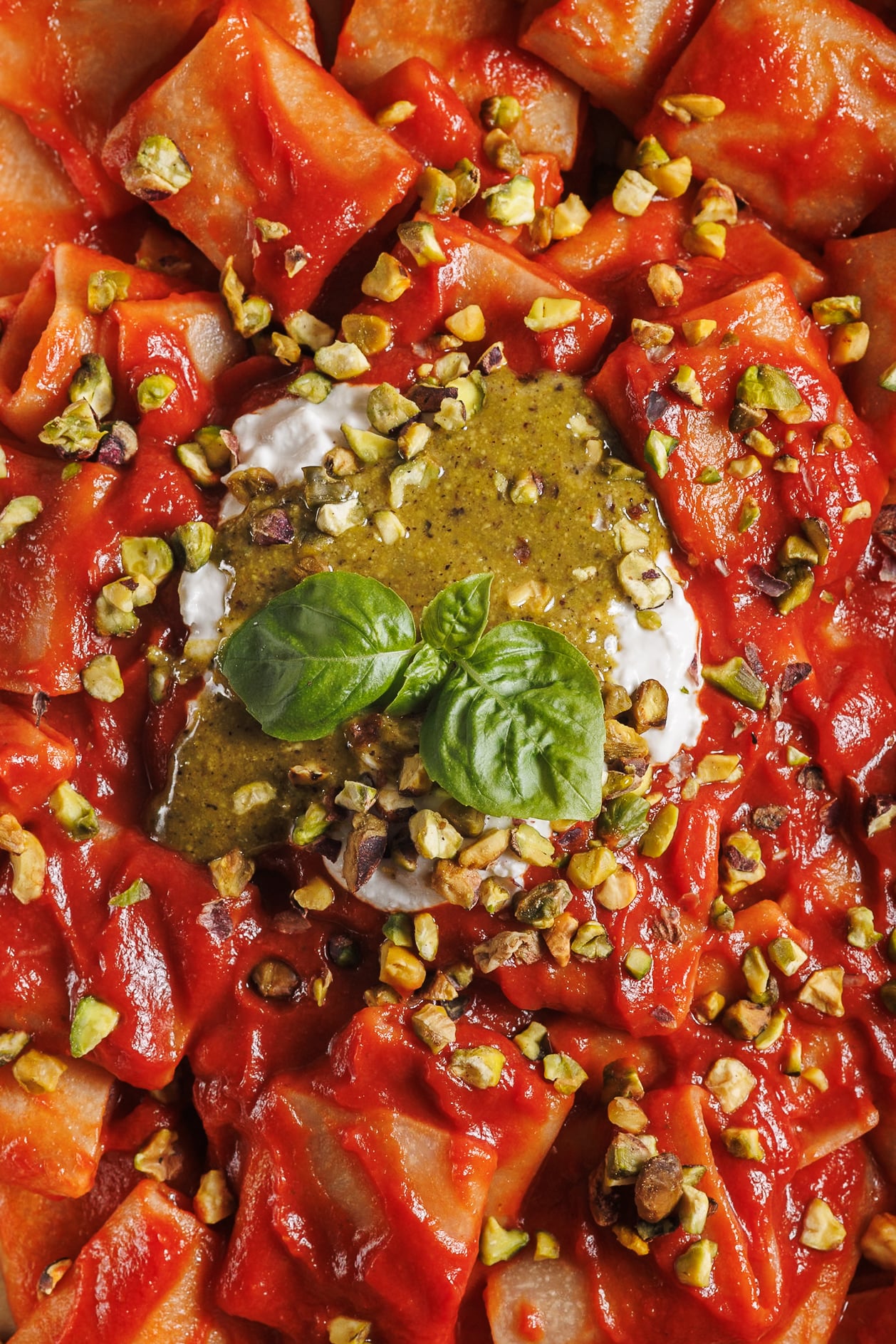
A plate doesn't become a diet meal because you change the flour's colour.
Wholemeal vs semolina pasta: per 100 g
| Per 100 g crudi | Pasta di semola | Pasta di semola integrale |
|---|---|---|
| Energia | 341 kcal | 330 kcal |
| Carboidrati disponibili | 72,7 g | 64,8 g |
| Fibra totale | 1,7 g | 7,1 g |
| Proteine | 13,5 g | 13,3 g |
| Grassi | 1,2 g | 2,2 g |
| Ferro | 1,4 mg | 2,7 mg |
| Magnesio | 51 mg | 100 mg |
| Potassio | 192 mg | 330 mg |
What Italian guidelines say
Does wholemeal pasta help you lose weight? What meta-analyses say
| Revisione | Studi e partecipanti | Effetto sul peso |
|---|---|---|
| Pol 2013 | 26 studi, 2.060 persone | +0,06 kg, non significativo |
| Maki 2019 | 9 studi randomizzati, 973 persone | -0,05 kg, non significativo |
| Sadeghi 2020 | 21 studi, 1.798 persone | nessun effetto su peso né su BMI |
And satiety? More nuanced than the story goes
Where wholemeal really wins
| Esito | Rischio relativo per 90 g al giorno |
|---|---|
| Malattia cardiovascolare | 0,78 |
| Malattia coronarica | 0,81 |
| Mortalità per tutte le cause | 0,83 |
| Mortalità per tumori | 0,85 |
| Ictus | 0,88, non significativo |
Glycaemic index: a three-point difference
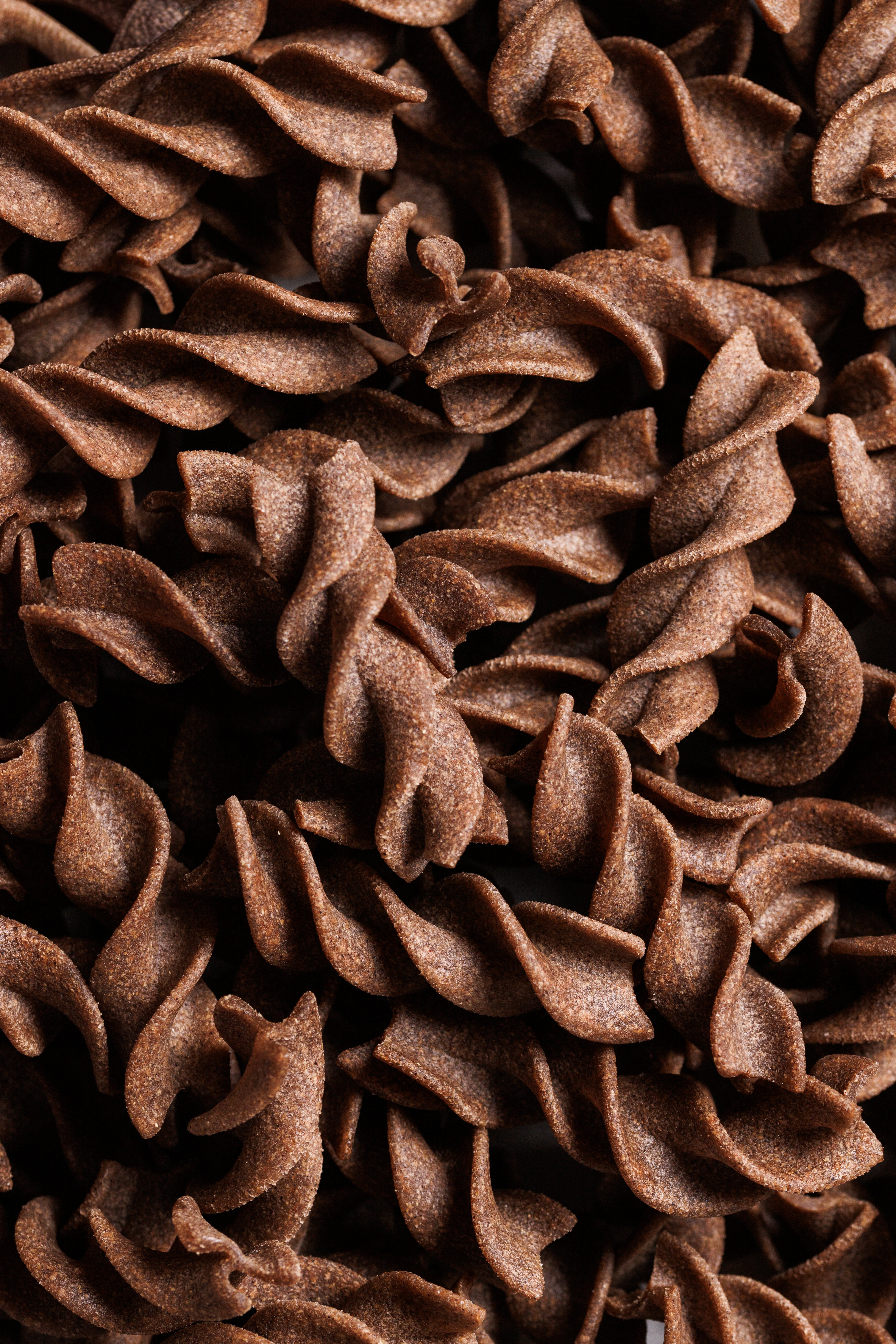
How to recognise real wholemeal pasta
And phytates? Do they reduce iron absorption?
At miscusi we put fibre in — not guilt
Quick answers (FAQ)
Does wholemeal pasta make you gain weight?
No — and no more than refined pasta: 330 kcal/100 g dry vs 341 (eleven less; nine on an 80 g portion). Cooked, the gap flips: wholemeal absorbs less water (182 vs 175 kcal/100 g).
Does wholemeal pasta help you lose weight?
Not by itself. Three independent meta-analyses (Pol 2013, Maki 2019, Sadeghi 2020) found no significant effect of whole grains on body weight in RCTs. Lower weight appears only in observational studies.
How many fewer calories does wholemeal pasta have?
Eleven per 100 g dry, nine per 80 g portion. In CREA tables the energy value for wholemeal is an estimate, not a direct measure.
Why do people say wholemeal pasta is more filling?
Fibre jumps from 1.7 to 7.1 g/100 g. Sanders 2021 confirms subjective hunger/fullness effects, but not a statistically significant drop in calories eaten at the next meal.
Wholemeal or regular pasta — which is better?
Depends on the goal. For fibre, iron, magnesium and long-term health outcomes, wholemeal wins. For calories and weight the difference is irrelevant; GI differs by only three points. Guidelines: at least half of daily cereal portions whole grain.
Does wholemeal pasta have a lower glycaemic index?
Yes, by about three points: 52 vs 55. Ranges overlap — format and pairings matter more.
How do you recognise real wholemeal pasta?
For dry pasta Italian law allows only whole durum semolina and water (ash 1.40–1.80%). On other bakery goods: “with bran” = added bran; “whole wheat flour” = whole grain milled.
Do phytates in wholemeal pasta reduce iron absorption?
Partly yes — guidelines acknowledge it cautiously. Alarming percentages come from studies adding phytate in rising doses. EFSA sets zinc needs by phytate level; wholemeal still has nearly twice the iron of refined pasta.
Sources
| 1. CREA, pasta di semola — alimentinutrizione.it |
| 2. CREA, pasta di semola integrale — alimentinutrizione.it |
| 3. CREA, pasta di semola cotta — alimentinutrizione.it |
| 4. CREA, pasta integrale cotta — alimentinutrizione.it |
| 5. CREA, Linee guida per una sana alimentazione, 2018 — PDF |
| 6. Pol K et al., Whole grain and body weight, Am J Clin Nutr, 2013 — doi |
| 7. Maki KC et al., Whole Grain Intake and Body Weight, Nutrients, 2019 — mdpi |
| 8. Sadeghi O et al., Whole-Grain Consumption Does Not Affect Obesity Measures, 2020 — doi |
| 9. Sanders LM et al., Whole Grain Intake on Appetite, 2021 — PMC |
| 10. Kristensen M et al., Wholegrain vs refined wheat bread and pasta, 2010 — pubmed |
| 11. Aune D et al., Whole grain consumption and CVD/cancer/mortality, BMJ, 2016 — bmj |
| 12. Aune D et al., Whole grain and type 2 diabetes, 2013 — pubmed |
| 13. Reynolds A et al., Carbohydrate quality and human health, Lancet, 2019 — lancet |
| 14. Di Pede G et al., Glycemic Index Values of Pasta, Foods, 2021 — mdpi |
| 15. DPR 187/2001, sfarinati e paste alimentari — GU |
| 16. ISS, Alimenti integrali — issalute.it |
| 17. Hallberg L et al., Iron absorption and phytate, 1989 — doi |
| 18. EFSA, Dietary Reference Values for zinc, 2014 — efsa |
| 19. ISS, Fibra alimentare — issalute.it |