Glycemic Index and Glycemic Load Explained: What Really Matters at the Table
8 min read
If you read "100" and panic — stop. We're about to dismantle another diet-culture nightmare. The glycemic index is probably the most misunderstood number in nutrition. It measures how fast a food raises blood sugar, fine. But if you stop at that figure on paper, you risk a spectacular mistake and miss the best of life (spoiler: good carbs).
To understand how your body really reacts, you need another key number: the glycemic load.
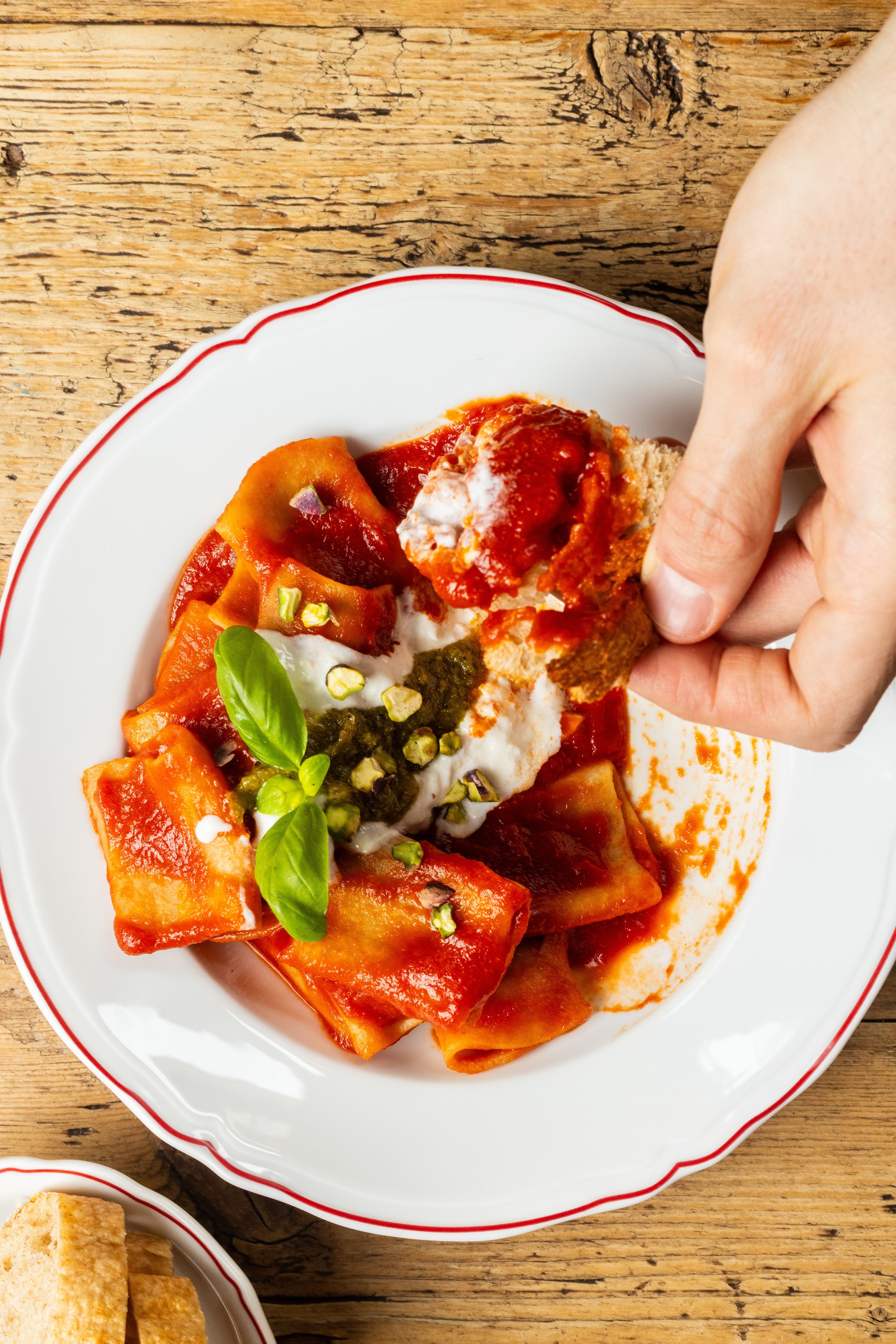
Let's put things in order — no white-coat jargon, no demonizing anything. At miscusi we have a soft spot for pasta, and we don't like seeing it in the dock for a value read the wrong way.
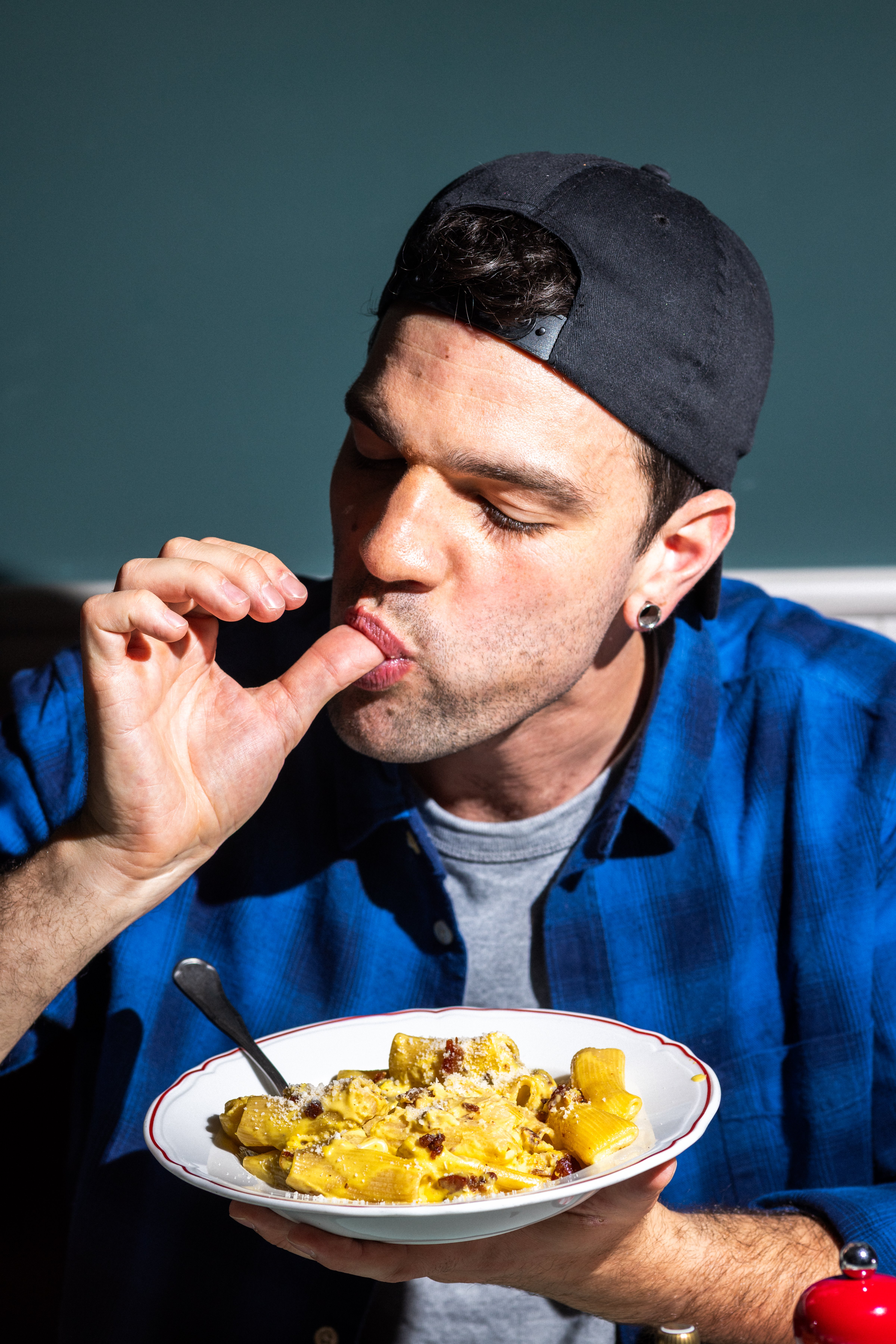
FUCK "CHEAT" MEALS. Enjoy food with awareness, not with a calculator.
The numbers don't lie (if you know how to read them)
Everyone Googles the classic glycemic-index food table, hoping for a list of what to erase forever from the shopping list. The base rules, set by the University of Sydney group and used internationally, go like this:
| Category | GI value |
|---|---|
| Low | ≤ 55 |
| Medium | 56 - 69 |
| High | ≥ 70 |
Thresholds also confirmed by the Linus Pauling Institute at Oregon State University. The scale reference is pure glucose = 100: every other food is measured against it. The idea isn't a trend — David Jenkins introduced it in 1981 in the American Journal of Clinical Nutrition.
But there's a trick diet scaremongers don't tell you: this value captures the quality of the carb in the lab (50 g carb portion, blood sugar measured for 2 hours), not the real quantity you put on your everyday plate.
What really matters: real life
This is where the real boss comes into play: the glycemic load. It brings together the two things that really matter: the speed (the famous spike) and the actual grams of carbohydrates you’re actually chewing. The formula is middle-school level:
Glycemic load = (glycemic index × grams of carbohydrates per serving) ÷ 100
| Category | Glycemic load per serving |
|---|---|
| Low | ≤ 10 |
| Medium | 11 - 19 |
| High | ≥ 20 |
Source: Harvard Health and Oregon State University.
Take watermelon: it scores very high on the GI scale, but it’s almost all water.
| Food | Glycemic index | Glycemic load |
|---|---|---|
| Watermelon | 72 - 80 (high) | 5 - 8 (low) |
| White bread | ~ 75 (high) | medium-high |
Watermelon values from Harvard Health and Oregon State; white bread (GI 75) from ISS - Issalute. Its real impact is very low. Moral of the story? No one has ever gained weight from a slice of watermelon in summer. The high number is scary, the reality reassuring.
The art of lowering the peak (spoiler: eat al dente)
You can "hack" the glycemic impact of your favourite foods. Here's how to manage GI without giving anything up:
Not theory: a 2021 scientific review confirms durum-wheat semolina pasta averages GI around 46–55 thanks to its compact structure (Foods 2021).
One last note: if you live with diabetes or altered blood sugar, GI and GL are useful tools but do not replace your doctor or a nutritionist.
| 1. Cook al dente. Overcooked pasta is absorbed much faster: Harvard tables go from 46 (al dente) to 58 (overcooked). |
| 2. Add fibre and good fats. A drizzle of raw EVO oil or vegetables and legumes slows assimilation (AIRC). |
| 3. Choose real grains. We use stone-milled ancient flours that keep the germ and fibre of the kernel, releasing energy steadily. |
So what about pasta? Values and types compared
Fair question. 100 g dry semolina pasta ≈ 341 kcal, with 72.7 g carbs, 13.5 g protein, just 1.2 g fat and 1.7 g fibre (CREA). An 80 g portion ≈ 270 kcal.
Average GI by type (Foods 2021):
| Pasta type | Average GI |
|---|---|
| Durum-wheat semolina (refined) | ~ 55 |
| Egg pasta | ~ 52 |
| Wholegrain | ~ 52 |
| With legumes | ~ 46 |
| Fresh semolina/ancient grains (ours, water-based) | ~ 46-55 |
At equal al dente cooking, wholegrain and legume pasta start a step lower: more fibre and, with legumes, more protein. That's why we choose stone-milled organic ancient grains and cook al dente — gradual response, not a spike.

At miscusi the glycemic peak isn't a problem — it's a well-made plate of pasta
You came this far to know if you can still enjoy a plate of pasta. The answer is yes — and we prove it at the table. Ours is Superpasta: fresh, eggless, only water and semolina from organic Kronos durum wheat and stone-milled ancient grains like Perciasacchi, bronze-die extruded. The kernel structure stays intact and energy releases slowly.
Enough psychological terrorism: your engine needs fuel, and it can taste great. We seat you, you pick the shape, we handle the rest. Check the menu or book your spot.
Quick answers (FAQ)
What is the real difference between glycemic index and glycemic load?
The first only measures the theoretical speed of sugar absorption. The second calculates the real impact on your body based on the exact portion you eat.
How do you calculate glycemic load?
Multiply the glycemic index by the grams of carbs in the portion and divide by one hundred. Under ten is low, over twenty is high. You do not need to be an engineer.
What are the glycemic index thresholds?
Up to fifty-five you are in the green zone (low), from fifty-six to sixty-nine you are in the middle, above seventy it is high. Pure glucose is the maximum, one hundred.
How can I manage a glycemic peak at the table?
By adding fibre, quality protein or healthy fats. Choosing less refined flours, not overcooking starches, and maybe adding a touch of acid such as vinegar or lemon.
Does pasta raise blood sugar too much?
Absolutely not. Thanks to its physical structure, durum semolina pasta has a medium-low release. Drain it nice and al dente and you are in a safe place.
Sources
| 1. University of Sydney, GI Group, "About GI" — glycemicindex.com |
| 2. Harvard Health Publishing — harvard.edu |
| 3. Linus Pauling Institute, Oregon State — oregonstate.edu |
| 4. Jenkins DJ et al., Am J Clin Nutr 1981 — academic.oup.com |
| 5. AIRC — airc.it |
| 6. ISS - Issalute — issalute.it |
| 7. Di Pede G. et al., Foods 2021 — PMC8623826 |