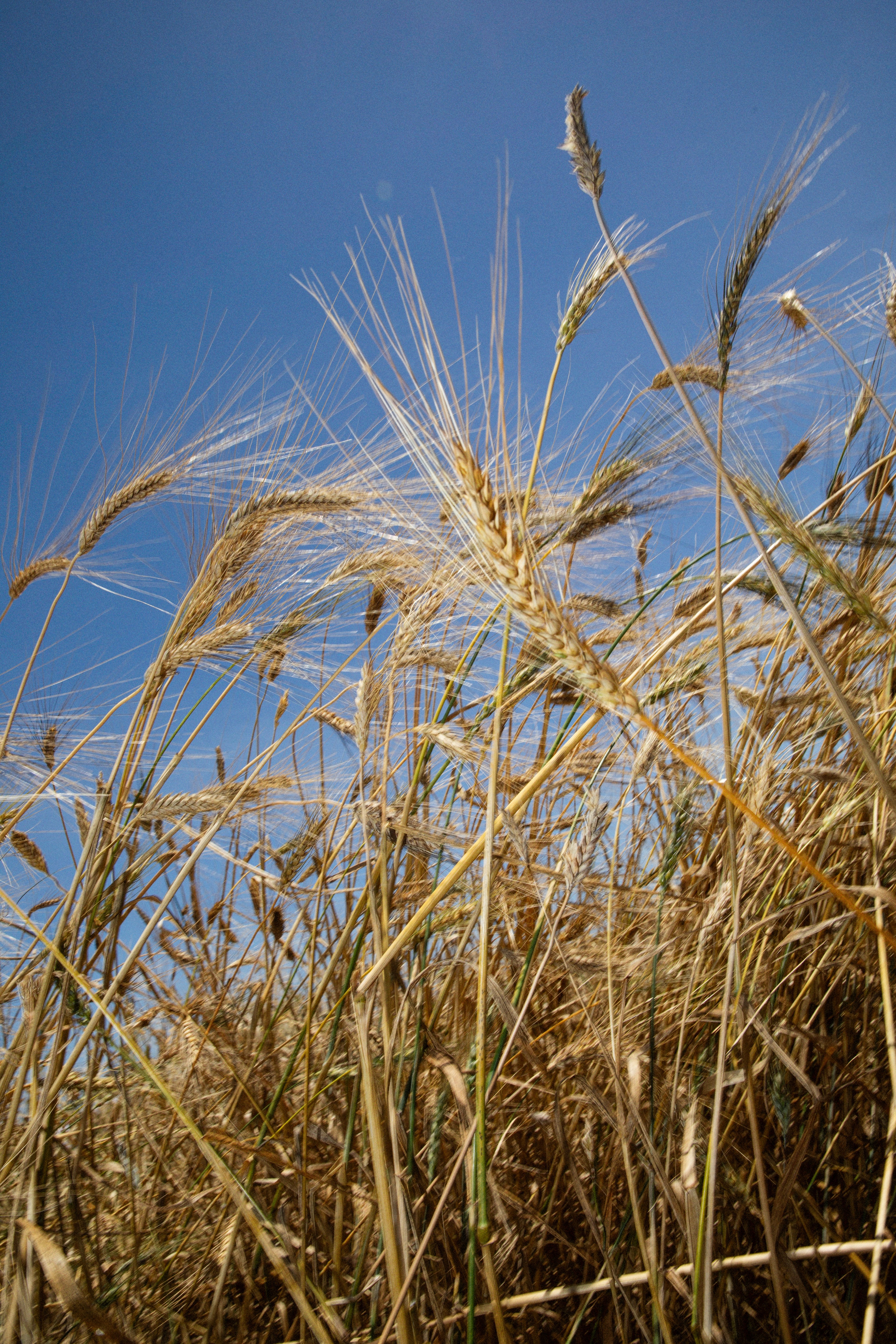
Ancient grains, without myths
At miscusi, ancient grains reach the table every day: Perciasacchi, a Sicilian durum wheat, is stone-milled into our organic semolina together with Kronos. Around ancient grains there are plenty of myths, and a few useful facts too.
Ancient grains are wheat varieties that spread before the Green Revolution and have remained substantially unchanged over the last century. No official register decides which ones belong to the category, so the name alone is not proof. In Italy, the best-known examples include Perciasacchi, Timilia, Russello, Bidì and Senatore Cappelli among durum wheats, and Verna, Gentil Rosso, Frassineto and Solina among soft wheats.
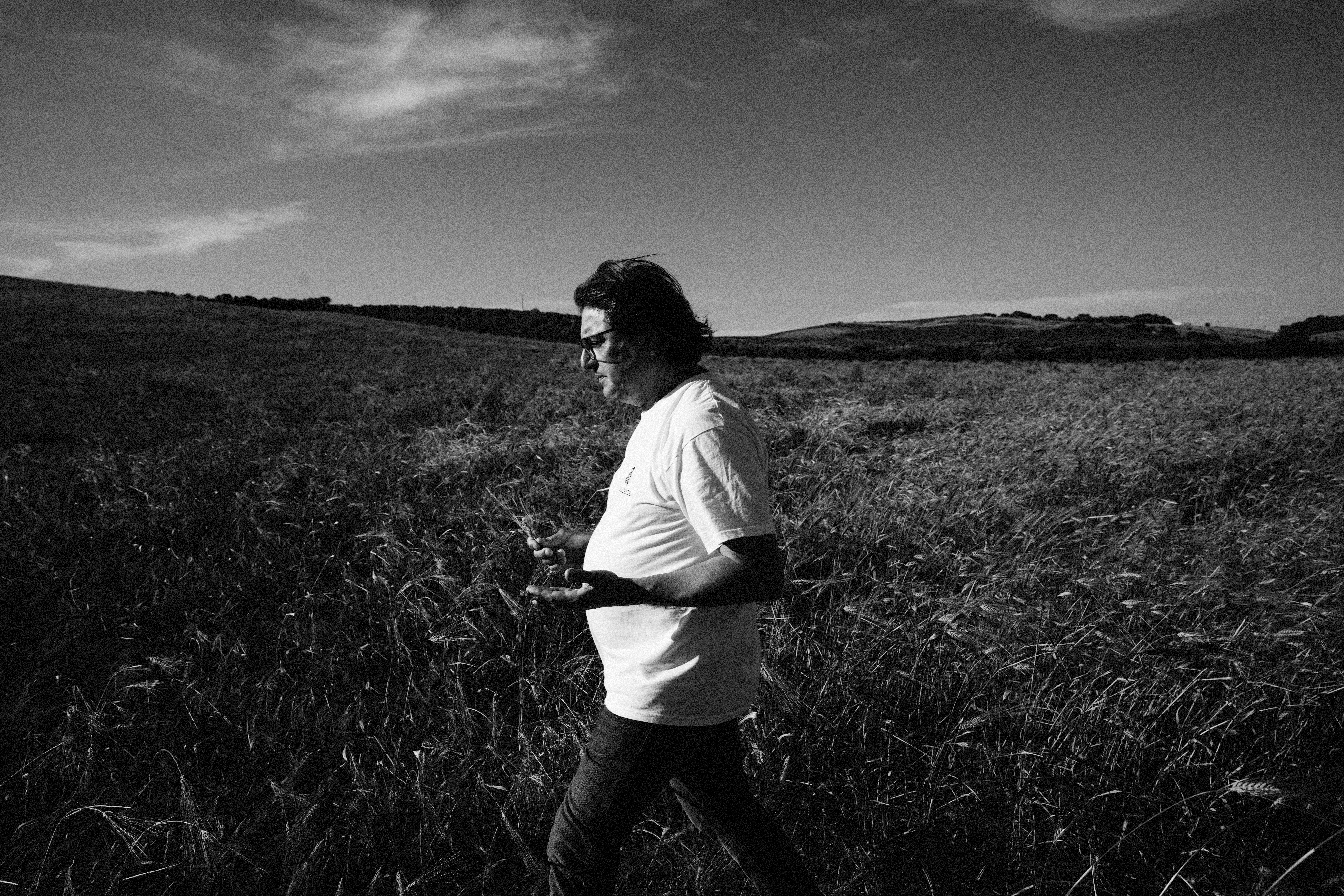
Ancient grains are really “ancient”, almost all of them. One even has a birth certificate.
What ancient grains are, and why there is no official list
Ancient grains are local varieties and populations of wheat selected over time by farmers, before intensive post-war breeding changed the target toward shorter and more productive plants. The boundary between ancient and modern is practical rather than legal: researchers often use the convention of varieties that have remained unchanged for roughly the last hundred years.
The useful point for shoppers is that the label “ancient grains” alone proves very little. A reliable product should name the variety and, ideally, the mill that works it. CREA's work on Sicilian ancient wheats goes in this direction: genetic markers can help identify varieties during official controls.
Which Italian ancient grains are there
Italian ancient grains include several durum wheats, mostly from southern Italy, and soft wheats from central and northern areas. Among the best-known names are Perciasacchi, Timilia or Tumminia, Russello, Bidì and Senatore Cappelli for durum wheat; Solina, Verna, Gentil Rosso, Frassineto and Inallettabile for soft wheat; and einkorn, which is a separate species.
Some names need caution. Bolero is a modern soft wheat. Saragolla can refer to historical populations, but certified seed sold under that name may be a modern cultivar. Etrusco does not have a clearly verifiable varietal sheet in the register checked for the article.
Senatore Cappelli dates from 1915 and was selected by a geneticist
Senatore Cappelli, perhaps Italy's most famous ancient grain, was created in 1915 by Nazareno Strampelli, the geneticist who shaped Italian wheat breeding. It came from genealogical selection starting from the North African population Jean Rhetifah, grown on the land of Marquis Raffaele Cappelli in Apulia.
By 1949 it covered a large share of Italy's durum wheat area, then declined because the plant is tall, lodges easily in wind and rain, and yields less than modern varieties. It is ancient in today's commercial language, but its story is also a story of twentieth-century selection.
Perciasacchi, our ancient grain, put to the cooking test
Perciasacchi is a Sicilian wheat documented on the island since at least the early nineteenth century, and for miscusi it is one of the organic semolinas used in Superpasta. CREA compared it with Russello, Margherito or Bidì, and Senatore Cappelli by turning the harvests into bronze-drawn spaghetti.
In that test Perciasacchi showed a stronger gluten index than Cappelli, a more stable dough, heavier kernels and a cooked pasta that was firmer and less sticky. The study covers one year, one field and dry pasta, while ours is fresh, but it gives numbers to the qualities we look for in the grain.
What really happened to modern wheat
Modern wheat was selected mainly to increase yield and reduce plant height. Italian data on durum wheat varieties from the twentieth century show yield gains together with progressively shorter plants. That is the solid part of the story.
The rest is often exaggerated. Creso, sometimes used in myths about modern wheat, descends from Senatore Cappelli through mutagenesis, a technique that is not regulated as GMO. Recent studies also reduce the idea that dwarfing genes alone transformed gluten beyond recognition.
What changes in the gluten of an ancient grain
Gluten is made of gliadins, which make dough extensible, and glutenins, which make it strong and elastic. Ancient species and varieties can have different balances between these protein families, which changes how the dough feels and behaves.
Studies comparing ancient and modern wheats show that some species, such as einkorn, have a much higher gliadin-to-glutenin ratio. This can mean a softer and less elastic network. It explains why ancient-grain flours need their own hydration and timing, but it does not mean they are gluten-free.
No ancient grain is suitable for people with celiac disease
On celiac disease, the answer is clear: no ancient wheat is suitable. Italian and international sources list wheat, spelt, einkorn, khorasan and related cereals among the grains that people with celiac disease must avoid.
Some people without celiac disease feel better when they reduce wheat, but recent research often points to fermentable carbohydrates such as fructans, not only to gluten. The right path is diagnosis, not replacing one wheat with another.
Minerals and polyphenols: where the data is solid
Two areas have more solid data: minerals and polyphenols. The long Broadbalk experiment in England shows that minerals such as zinc, iron, copper and magnesium decreased in wheat grain after the spread of high-yield semi-dwarf varieties, even when the soil did not show the same decline.
This is often described as a dilution effect: more grain per hectare means the same resources are distributed over more kernels. On polyphenols, comparisons of Sicilian populations and improved varieties show distinct profiles, with local populations often richer, although the result depends on the variety.
Stone milling: what changes in flour
Stone milling mainly changes particle size and distribution. CREA compared stone milling and roller milling in soft wheat and found clear differences in granulometry, with stone-milled products showing finer and more evenly distributed particles.
That matters in dough because particle size affects water absorption and handling. Stone milling can also keep more of the whole grain together, while roller milling separates parts and recombines them. For pasta, the practical point is that milling is a processing choice, and its effect is seen in the plate before it is seen in a table.
At miscusi, wheat has a name and a mill
At miscusi, wheat is not an anonymous ingredient. Superpasta is fresh, egg-free, made with water and organic durum-wheat semolina from Kronos and stone-milled ancient grains such as Perciasacchi, then bronze-drawn.
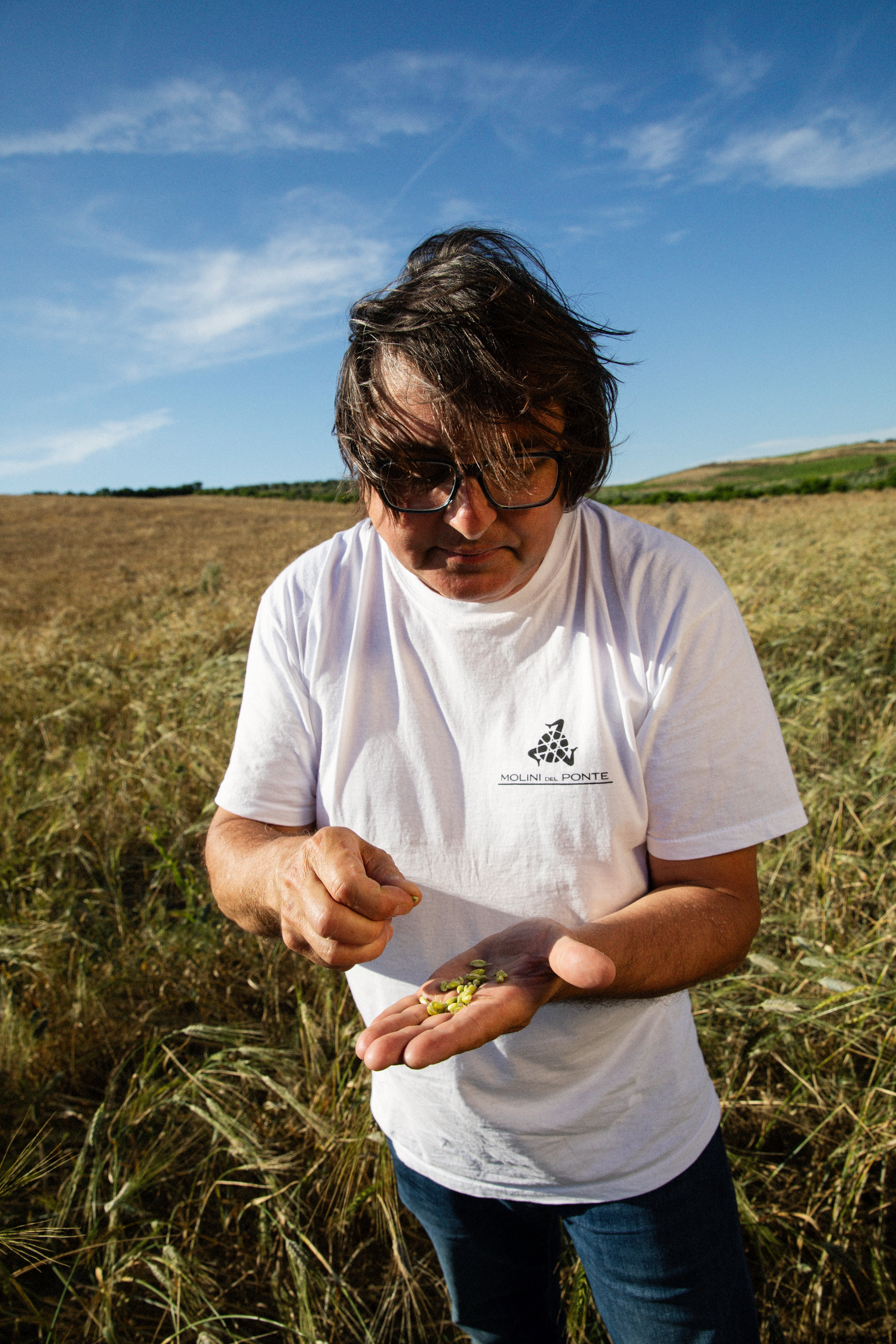
Ancient grains were chosen for flavor and for the biodiversity they keep alive in the fields. Our Perciasacchi comes from Molini del Ponte in Castelvetrano, Sicily, where it is stone-milled with late nineteenth-century mills. A good plate of pasta should taste good and tell you where it comes from.
Quick answers (FAQ)
Which grains are ancient grains?
They fall into three groups: durum wheats such as Perciasacchi, Timilia, Russello, Bidì and Senatore Cappelli; soft wheats such as Solina, Verna, Gentil Rosso, Frassineto and Inallettabile; and einkorn, a separate species. There is no official list.
Which Sicilian ancient grains are best known?
The best known are durum wheats: Perciasacchi, Timilia or Tumminia, Russello and Bidì. CREA has characterized several Sicilian varieties with molecular markers to support official checks.
What is pasta made with ancient grains?
It is pasta made with semolina from an ancient variety, often Sicilian durum wheats such as Perciasacchi and Timilia, or Senatore Cappelli. At miscusi, stone-milled Perciasacchi is part of the organic semolina used for Superpasta.
How are ancient-grain flours used?
They need their own hydration and timing, because their gluten composition creates a softer network. Many are stone-milled, which changes particle size and dough behavior.
Are ancient grains suitable for celiac people?
No. All wheats contain gluten. People with diagnosed celiac disease must exclude wheat, including ancient varieties.
Sources
Bibliographic sources are listed with the original titles and URLs.