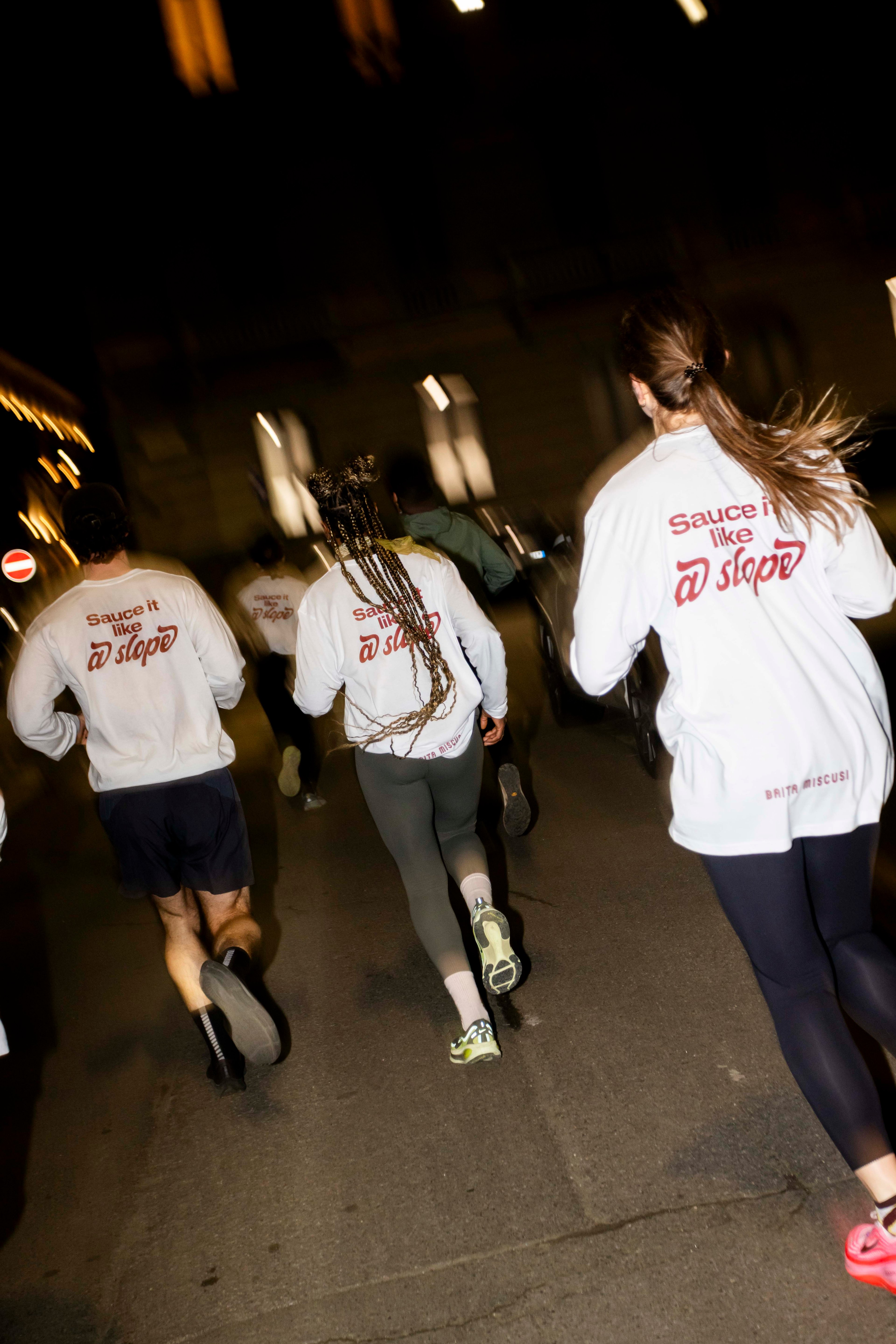
The race starts at the table, too
At miscusi we follow long races closely, because Francesco Puppi and the other Power of Carbs athletes often come to us to fuel up. One thing is clear: the race is often decided in the kitchen a few days before the start.
Before a half marathon or a marathon, eating works in four moments: enough carbohydrates during training weeks, a simple carbohydrate-rich dinner the night before, breakfast one to four hours before the start, and fuel during the race. Water should follow thirst.
Carbohydrate loading is a separate strategy and is mainly useful for the marathon; here we focus on the rest of the plan.
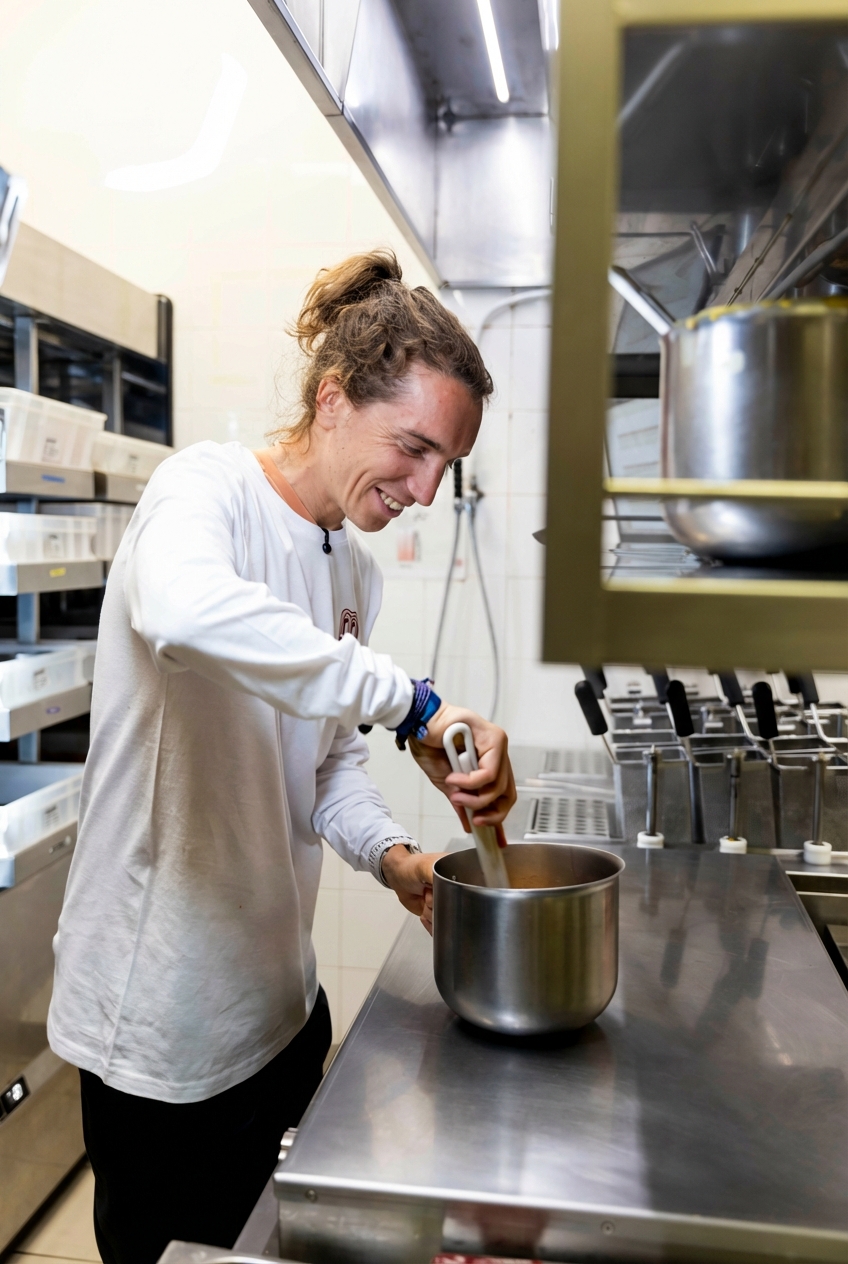
In a marathon, amateur runners take in about twenty grams of carbohydrate per hour on average. What they need is at least three times that. The bill comes due around kilometre thirty.
The marathon runner diet during training weeks
The amount of carbohydrate rises with training volume, and marathon training usually requires more than runners think.
The ACSM position stand divides daily needs by workload: light training 3-5 g/kg, moderate training 5-7 g/kg, high training 6-10 g/kg and very high training 8-12 g/kg. For a 70 kg runner, that can mean from about 210 g to more than 800 g per day depending on the phase.
A runner preparing a half marathon with four or five one-hour runs is usually in the moderate range. Marathon long-run days often move into the high range. In practice, a plate of pasta at lunch and one at dinner are not excess: they are part of the baseline, completed by bread, fruit, breakfast cereals and snacks.
The rhythm matters: carbohydrates rise on long-run and interval days and fall on easier days. The day after the long run still needs carbohydrate because muscles are rebuilding glycogen stores.
What to eat the evening before a half marathon
The pre-race dinner should be familiar, rich in carbohydrates, low in fibre and low in fat. Nothing new belongs on the plate.
Sports Dietitians Australia recommends reducing fibre, protein and fat in the 12-24 hours before long-distance races and increasing carbohydrates, even in liquid form, to lower the risk of gut problems.
Pasta with a simple sauce, rice, white bread or potatoes are good choices. Large raw salads, whole legumes, fried foods and rich sauces can wait until after the race. If onion, garlic or other fermentable foods usually bother you, the night before the race is not the moment to test them.
For a half marathon this dinner is enough. For the marathon it closes the two days of carbohydrate loading. In both cases, eat well without eating for two.
Pre-race breakfast: how much and when
Aim for 1 to 4 grams of carbohydrate per kilo of body weight: the more time you have before the start, the more you can eat.
A practical rule is one gram per kilo for every hour before the start. With 3-4 hours available, breakfast can be a real meal; with 1-2 hours, choose a lighter low-fibre snack such as toast, a ripe banana or a cereal bar.
For early races, a light snack one or two hours before the start avoids waking up at four in the morning. The golden rule is to test race breakfast in training, at the same time and with the same foods.
Fuel during the race: carbohydrates and gels
For a half marathon, 30-60 g of carbohydrate per hour are useful when the race lasts more than about 75 minutes. In a marathon the target can rise to 90 g/h, using products that combine glucose and fructose.
One gel contains about 26 g of carbohydrate on average, but labels vary a lot. That means roughly one to two gels per hour for many half marathon runners and more for marathon runners.
A Danish study at the Copenhagen marathon found that amateur runners following a precise nutrition plan finished about eleven minutes faster than matched runners using their usual strategy. Another study found that most marathoners planned too little carbohydrate and actually consumed even less.
The gut trains like the legs
Taking in 60 g of carbohydrate per hour while running is a skill built in the weeks before race day.
Trying gels for the first time during the race often causes nausea, cramps and urgent bathroom stops. Studies on gut training show that repeated carbohydrate intake during running can reduce gastrointestinal symptoms and improve tolerance.
In practice, use the long runs of the last six to eight weeks to practise with the same gels or drink you will use in the race, at the same intervals and starting from the lower dose.
How much to drink in a marathon and why not to overdo it
Drink according to thirst. Drinking beyond thirst in a long race can be dangerous.
The ACSM gives a broad reference range of 0.4 to 0.8 litres per hour, adapted to heat, sweat rate and gut tolerance. The risk to know is exercise-associated hyponatraemia, when sodium in the blood becomes too low because water intake exceeds losses.
The consensus recommendation is to use thirst as the guide. Sports drinks with sodium do not protect someone who drinks too much. Headache, confusion, nausea or swelling during or after the race require medical help.
Marathon supplements: what really works
Besides gels, the supplement with the strongest evidence for half marathon and marathon performance is caffeine.
The usual evidence-based dose is 3-6 mg per kilo about one hour before exercise, although some runners use smaller amounts during the race through caffeinated gels. The effect is real but modest, and people respond differently.
Caffeine must be tested in training. Trembling, anxiety or stomach discomfort can happen, and people with heart or blood pressure issues should speak with a doctor. Sodium can help heavy sweaters or very long efforts, while salt capsules for cramps have much weaker evidence.
Half marathon and marathon nutrition: what changes
The main differences are carbohydrate loading in the days before the race and fuel during the race. The rest is similar.
For a half marathon, carbohydrate loading is usually unnecessary; for a marathon, 36-48 hours at 10-12 g/kg per day can be useful. Breakfast is 1-4 g/kg in both cases. During the race, the half often needs 30-60 g/h, while the marathon can require up to 90 g/h.
A two-hour half marathon can mean about two to five gels. A four-hour marathon can mean nine to fourteen gels, less if part of the carbohydrate comes from sports drink. The half forgives mistakes; the marathon keeps score.
At miscusi, the race starts at dinner
If you came here to understand what to eat before a half marathon or marathon, the easiest part to fix is dinner: carbohydrates, a light sauce and no surprises.
At miscusi you find fresh Superpasta made with water and organic semolina. A portion of Spaghetti, without sauce, contains 86 grams of carbohydrate according to miscusi internal nutrition data.
Choose a dish from the menu or build your own by choosing pasta shape, sauce and protein, leaving out anything you do not want before race day. Book your table for the evening before: you take care of the kilometres.
Fast answers (FAQ)
Can I eat pasta the evening before the race?
Yes. It is one of the best choices, as long as it is familiar and served with a simple sauce.
How many hours before the race should I have breakfast?
One to four hours before the start. Test the same breakfast in training.
Do I need gels in a half marathon?
If you run for more than about 75 minutes, yes: aim for 30-60 g of carbohydrate per hour.
Can I drink coffee before the race?
Yes, if you are used to it. Caffeine can help endurance performance, but it must be tested in training.
How much should I drink during a marathon?
Drink according to thirst, generally within 0.4-0.8 litres per hour depending on conditions.
What is the marathon runner diet?
A normal diet with plenty of carbohydrates, adapted to training load.
Sources
| 1. Thomas DT, Erdman KA, Burke LM, Nutrition and Athletic Performance, ACSM position stand, 2016. https://www.dietitians.ca/DietitiansOfCanada/media/Documents/Resources/noap-position-paper.pdf |
| 2. Sports Dietitians Australia, Distance running, 2016. https://www.sportsdietitians.com.au/wp-content/uploads/2017/05/FFYS_Distance-Running_2016.pdf |
| 3-14. Scientific papers and miscusi internal nutrition data listed in the Italian source article. |