A group of people wearing branded long-sleeve shirts run together on a city street at night.

Gym nutrition

The real numbers for mass and cutting

The hardest gym myth isn't about an exercise — it's about the plate: chicken and rice forever. The real numbers: protein 1.6–2.2 g/kg/day, fats 0.5–1.5 g/kg, carbs with remaining calories, not under 3–5 g/kg. Mass: +10–20% surplus if beginner, +5–10% if advanced. Cutting: lose 0.5–1% body weight per week. Italian institutional sources give lower protein numbers — a real divergence this article explains.
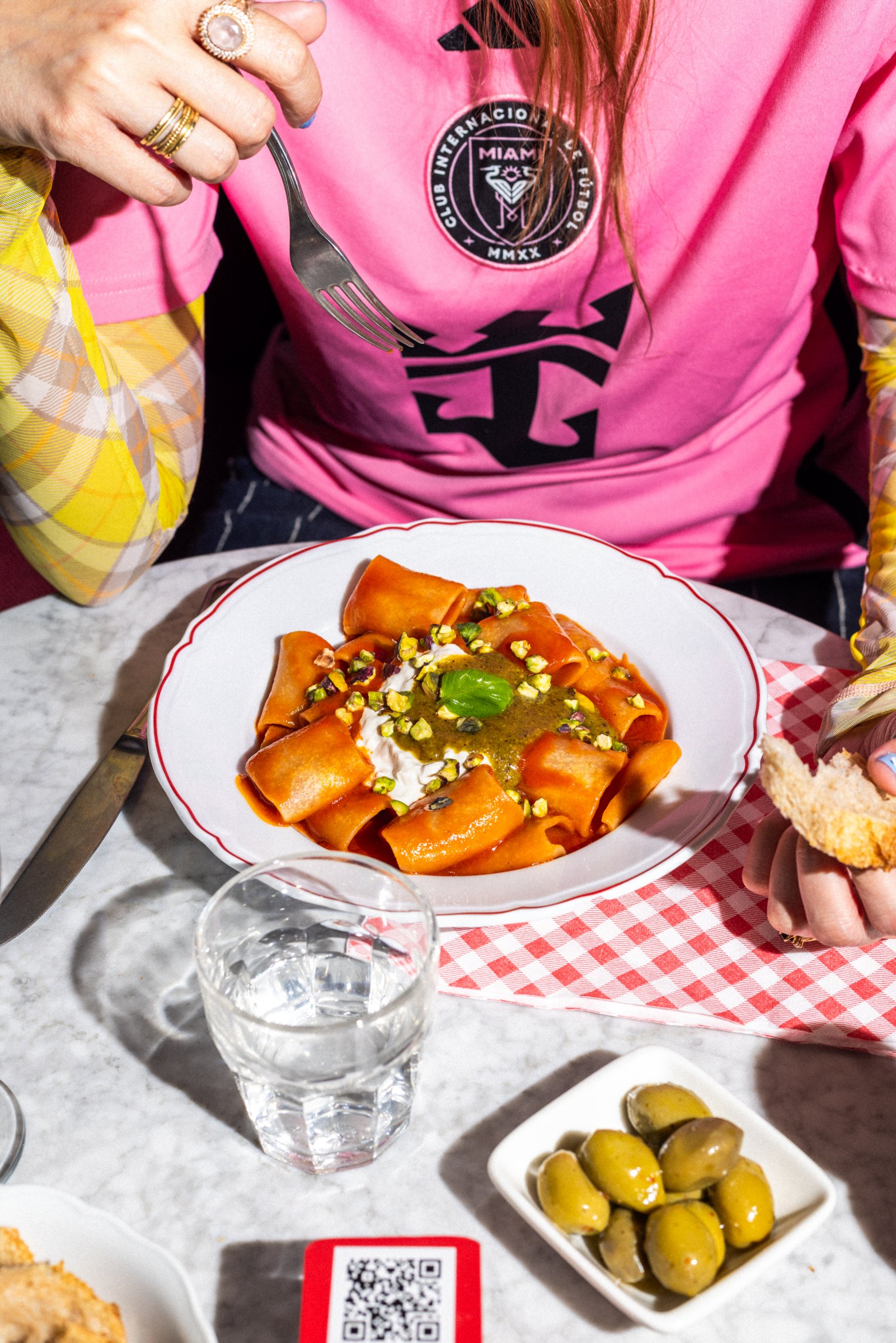
A person wearing a pink soccer jersey enjoys a plate of pasta topped with burrata, pesto, and pistachios at a restaurant table.

Muscles are built in the gym. You put the fuel on the table.


Bulking phase: how much surplus and how fast

Muscle gain needs a small surplus. Key ranges from Iraki 2019: beginners +10–20% above maintenance and 0.25–0.5% weekly weight gain; advanced +5–10% and ~0.25%/week; protein 1.6–2.2 g/kg; fats 0.5–1.5 g/kg; carbs remaining calories ≥3–5 g/kg. Example 75 kg man at 2,600 kcal maintenance → 2,860–3,120 kcal and +200–375 g/week. Going slow is efficiency, not patience.

Cutting phase: 0.5–1% body weight per week

Helms 2014: set calories to lose ~0.5–1% body weight/week; protein 2.3–3.1 g/kg FFM; fats 15–30%; carbs = remaining calories. At 80 kg that's 400–800 g/week. The leaner you get, the more you should slow down (ISSN diets).

Protein: how much you really need (and why Italy differs)

ISSN: 1.4–2.0 g/kg/day for most trainees, 20–40 g per meal every 3–4 hours; in deficit 2.3–3.1 g/kg. Italian ISS/Ministry cite ≤1.5 g/kg; general population LARN 0.90 g/kg. Different questions: safety vs performance. CREA: athletes often cover protein by eating more food — avoid self-prescribing protein supplements.

Carbs are not the enemy of cutting

Mass phase: carbs = remaining calories, at least 3–5 g/kg. Ketogenic approaches underperform vs higher-carb ones in trained people (Iraki 2019). In contest prep, protect carbs if training drops (Helms 2014). Glycogen is the reason. Example 75 kg: ~338 g carbs ≈ half of daily calories — needs pasta, rice, bread, fruit.
A red decorative plate with the phrase 'EAT PASTA RUN FASTA' displayed on a dark wall.

Fats: the floor you shouldn't go under

Reference 15–30% of calories or 0.5–1.5 g/kg. CREA: typically 20–35%, no benefit under 20%. On 2,600 kcal, 20% ≈ 58 g fat. Fat cuts from 30–40% to 15–25% may modestly lower testosterone within normal ranges — unclear impact on muscle gain.

Gym diet for women: what changes and what doesn't

Same principles, different absolute numbers. Strength athletes: ≥1.6 g protein/kg/day; 20–30 g portions; carbs 6–10 g/kg for max performance; fats ≥20%. Energy expenditure rises 2.5–11% in the luteal phase. Avoid low energy availability <30 kcal/kg FFM/day; target 40–45 (IOC REDs).

Supplements: what has evidence and what doesn't

Creatine monohydrate is the strongest ergogenic (ISSN): load 5 g ×4 for 5–7 days or 3 g/day for 28 days; maintain 3–5 g/day. Also: caffeine 5–6 mg/kg, beta-alanine 3–5 g, citrulline malate 8 g, omega-3 2–3 g. Protein powder closes daily totals (20–40 g) — not a shortcut. CREA: don't self-prescribe supplements as diet replacements.

When obsession becomes a problem

CREA lists muscle dysmorphia among eating disorders: young people obsessed with extreme muscle growth, hyper-protein diets, frequent supplements and, in worst cases, anabolic steroids. Counting grams is a tool — if it becomes the thought that decides how you feel, talk to a professional.

A sample training day (adapt it)

CREA suggests five meals for athletes. Example: breakfast oats/bread + fruit + Greek yogurt/eggs; snack fruit/nuts; lunch pasta + protein + veg + oil; pre-workout simple carbs; dinner carbs + 20–40 g protein + veg. See also our pre- and post-workout pasta guides.

At miscusi, a gym diet has pasta at the centre

300+ g carbs/day, protein across 4–5 meals, fats not cut: an abundant diet with pasta at the centre. Our Superpasta: fresh, eggless, bronze-die — a spaghetti plate brings ~86 g carbs and 16+ g protein. Menu or make your own. Eat carbs, feel good.

Quick answers (FAQ)

What should you eat when you go to the gym?

Protein spread across the day, 1.6–2.2 g per kg of body weight, plenty of carbs (at least 3–5 g/kg), and fats at 15–30% of calories. In practice: cereals and pasta as the energy base, a protein source at every main meal, vegetables, EVO oil and fruit.


How much protein per day for the gym?

International position stands indicate 1.4–2.0 g/kg/day, and 2.3–3.1 g/kg in a calorie deficit for resistance trainees. Italian institutional sources are more conservative and cite a 1.5 g/kg ceiling.


How big a calorie surplus for building mass?

10–20% above maintenance for beginners/intermediates, 5–10% for advanced trainees, with weekly weight gain of about 0.25–0.5%. Larger surpluses speed fat gain without adding more muscle.


How much can you lose per week when cutting?

About 0.5–1% of body weight per week — 400–800 g for someone at 80 kg. The leaner you get, the more you should slow down: a gradual deficit preserves muscle better.


What should a woman who lifts eat?

The same principles, with at least 1.6 g protein/kg/day in 20–30 g portions, fats not under 20% of calories, and abundant carbs. Avoid low energy availability below 30 kcal per kg of fat-free mass per day.


Which supplements matter for the gym?

Creatine monohydrate has the strongest evidence: 3–5 g/day maintenance, with or without a loading phase. Caffeine, beta-alanine, citrulline malate and omega-3 also have enough support. Protein powder is a convenient food to hit daily totals, not a booster.

Sources


1. Iraki J. et al., Nutrition Recommendations for Bodybuilders in the Off-Season, Sports 2019 — mdpi
2. Helms ER et al., Evidence-based recommendations for natural bodybuilding contest preparation, JISSN 2014 — jissn
3. Aragon AA et al., ISSN position stand: diets and body composition, 2017 — jissn
4. Jäger R et al., ISSN position stand: protein and exercise, 2017 — PMC5477153
5. Kreider RB et al., ISSN position stand: creatine supplementation, 2017 — jissn
6. Wohlgemuth KJ et al., Sex differences and female specific nutritional strategies, 2021 — jissn
7. Mountjoy M et al., IOC consensus statement on REDs, BJSM 2023 — bjsm
8. CREA, Linee guida per una sana alimentazione, 2018 — crea.gov.it
9. ISS, L'alimentazione nella pratica motoria e sportiva — iss.it
10. ISS - Issalute, Proteine alimentari — issalute.it
11. miscusi, analisi nutrizionale interna del menu, 2026